



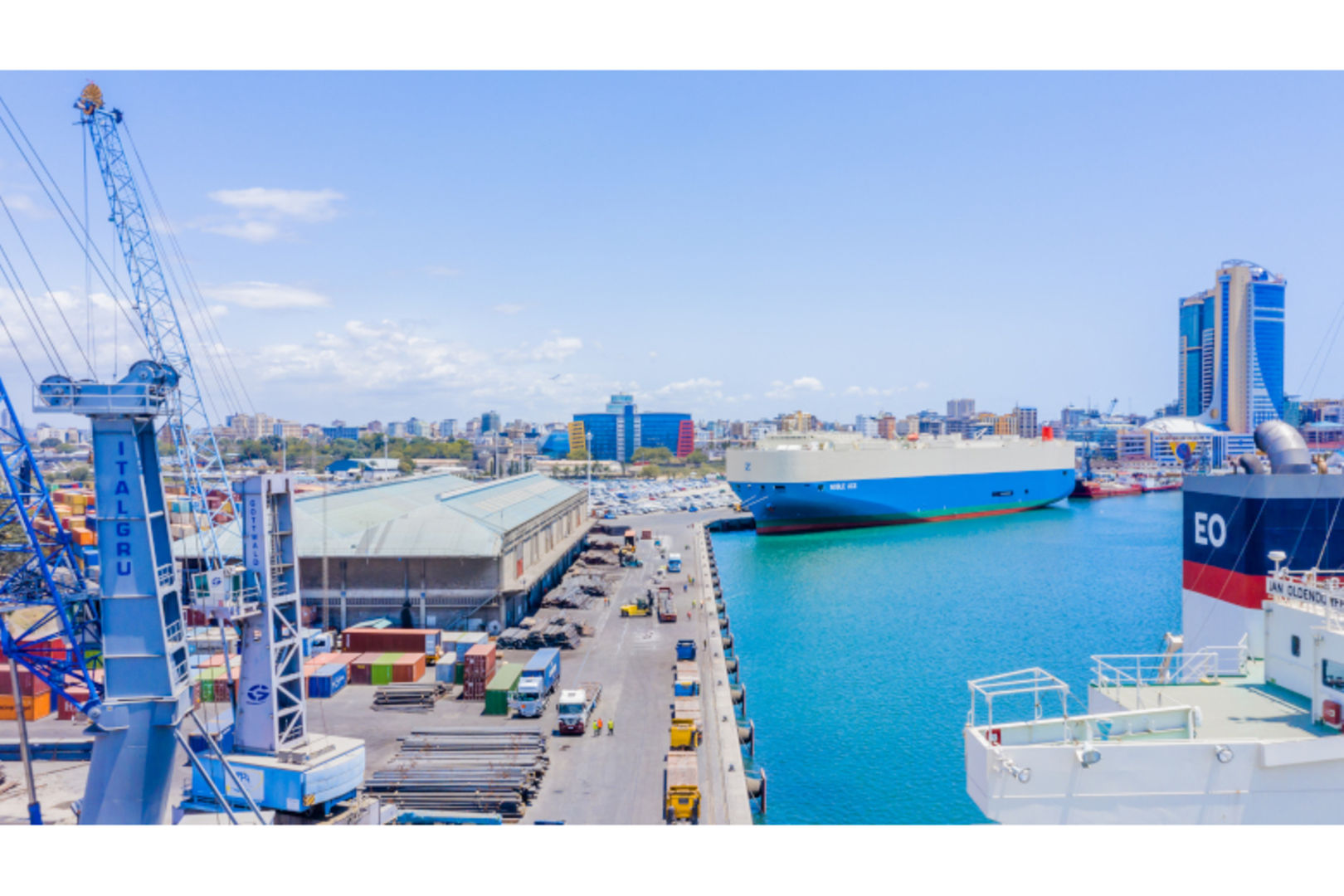
Tanzania’s drive to strengthen Dar es Salaam Port and its inland transport network is beginning to reshape the competition for transit cargo serving some of East and Central Africa’s largest markets.
Transit cargo through Dar es Salaam Port rose by 17 percent to 14.61 million tonnes during the 2025/26 financial year, with the Democratic Republic of Congo (DRC), Zambia and Rwanda accounting for the bulk of the increase.
The strongest growth came from DRC-bound cargo, which increased by 30 percent to 7.77 million tonnes, giving the country more than half of Dar es Salaam’s transit traffic. Rwanda-bound cargo also recorded strong growth, rising by 24 percent to 2.18 million tonnes, while Zambia remained one of the port’s major markets at 3.41 million tonnes.
The figures come at a time when Tanzania is investing heavily in the port, railway and road infrastructure connecting Dar es Salaam with inland markets, while private investment is also changing cargo-handling operations at the port.
The developments are increasing the range of transport options available to cargo owners moving goods from the Indian Ocean to landlocked markets, particularly DRC, Zambia and Rwanda.
Total cargo handled at Dar es Salaam Port reached 33.71 million tonnes in 2025/26, representing a 21.5 percent increase from the previous financial year, according to official port data reported this month.
Longer-term government figures also indicate a sustained rise in port activity. Cargo handled at Dar es Salaam increased from 16.27 million tonnes in 2020/21 to 27.76 million tonnes in 2024/25, while the average time container vessels spent at berth declined from about 10 days to three.
Private investment has been an important part of the changes, with Terminal 1 operated by DP World following its entry into a 30-year concession in April 2024.
The global port operator has deployed USD123 million by April 2026 on equipment, infrastructure, technology and operating systems, including cranes, cargo-handling systems, yard infrastructure and two gates linking the port with Nelson Mandela Road.
Eight new diesel-electric Rubber Tyred Gantry Cranes (RTGs), specialised equipment used in container handling, were commissioned in June.
The changes have coincided with a sharp increase in container throughput. The terminal handled 44,001 containers in May, 45,856 in June, 46,582 in July and 48,793 in August, according to data from regulators.
This compares with monthly container handling of between 8,000 and 13,000 before 2024.
Recent reports also indicate that cargo discharge times for comparable operations at Terminal 1 have fallen from more than 300 hours to under 28 hours since operations began under the concession.
The port is also receiving larger and more specialised vessels. Among them is the 240-metre M/V RAMHAN, which DP World says discharged nearly 7,900 heavy-duty vehicles in just over 27 hours.
The changes extend beyond containerised cargo, with increased handling of dry bulk, general cargo and roll-on/roll-off traffic.
Government plans for additional dry-bulk equipment are expected to increase handling capacity by 65 percent for commodities including wheat, sulphur and fertiliser.
Dar es Salaam currently records average wheat discharge rates of more than 12,000 tonnes per day, placing the port among the higher-performing facilities in the region.
However, faster cargo handling at the port is only one part of the competition for regional transit business.
Once cargo leaves the port, customs clearance, inland storage, railway capacity, road conditions and border procedures become critical factors in determining the overall cost and delivery time for cargo owners.
Tanzania’s investment in the Standard Gauge Railway is therefore emerging as another important component of the regional logistics strategy.
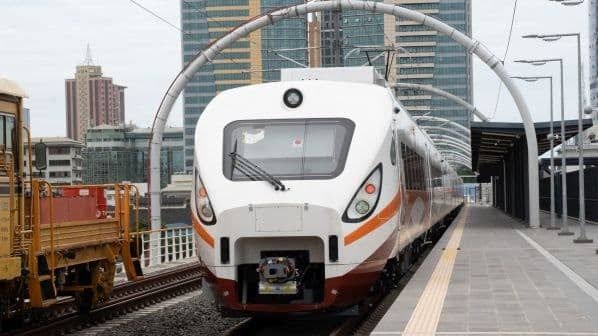
Commercial freight operations on the SGR between Dar es Salaam and Dodoma began in July 2025, while construction continues on sections intended to extend the network westwards.
A planned freight terminal at Morogoro is designed to connect railway cargo with road transport serving domestic and neighbouring markets.
Kwala is another key element of the inland logistics push. The dry port is already receiving trains from Dar es Salaam and is designed to handle about 300,000 containers annually, with space allocated to neighbouring countries including DRC, Zambia and Rwanda.
For Zambia, the rehabilitation of the Tanzania-Zambia Railway Authority (TAZARA) is expected to provide another route for strengthening the connection between Dar es Salaam and Southern African markets.
Physical works under the revitalisation programme moved forward in July, including construction of a new operations control centre and training centre in Dar es Salaam.
Road infrastructure is also being upgraded along major regional trade routes.
At Tunduma, the border approach is being widened from one lane to four after congestion became a recurring challenge for trucks transporting goods between Tanzania, Zambia, DRC and other Southern African markets.
At the same time, administrative reforms are being introduced to reduce delays in maritime services.
The Tanzania Shipping Agencies Corporation (TASAC) is preparing to introduce a new Maritime Transport e-Regulatory System, allowing maritime service providers to process licences, registrations and supporting documents online instead of relying largely on paper-based procedures.
The regional reach of Dar es Salaam’s logistics system was further demonstrated this month through a partnership involving DP World and the United Nations World Food Programme, which moved 5,000 tonnes of rice through the port for onward distribution to Burundi, DRC and Rwanda.
The shipment illustrates how improvements at the port are increasingly connected to a wider logistics chain extending hundreds and, in some cases, thousands of kilometres into neighbouring countries.
The growth in DRC and Rwanda-bound cargo indicates stronger use of the Dar es Salaam corridor as port capacity and inland connections improve.
Zambia presents a different picture, however, with its transit volumes at 3.41 million tonnes despite continued investment in the corridor.
The performance highlights the fact that port investment alone does not determine where cargo owners send their goods. Commercial decisions can also be affected by border charges, taxation, railway availability, road conditions, customs procedures and the overall predictability of the corridor.
For Tanzania, the emerging challenge is therefore no longer limited to increasing the amount of cargo handled at Dar es Salaam Port.
The broader test is whether improvements made at the waterfront can be translated into faster, more predictable and competitive movement of goods all the way to inland markets.
As DRC, Zambia and Rwanda remain major destinations for transit cargo, competition between regional corridors is increasingly being determined by the performance of the entire logistics chain—from vessel discharge and customs clearance at the port to rail and road connections, border procedures and final delivery.
Dar es Salaam has increased its handling capacity and reduced some of its longstanding port delays. The next phase of Tanzania’s regional logistics strategy will depend on how consistently those gains can be carried from the coast to customers deep inside the continent.