



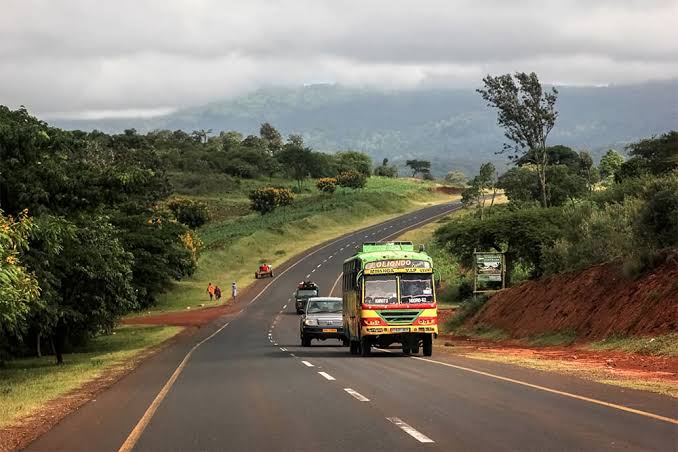
THE Roads Fund Board (RFB) plans to spend at least 999.40bn/- in the current financial year to facilitate its key responsibilities, including financing road maintenance projects across various regions of the country.
According to the plan, the budget will be financed through various sources of revenue within the Board’s operations.
Giving an exclusive interview in Dodoma, the Acting Chief Executive Officer (CEO) of the Roads Fund Board, Engineer Rashid Kalimbaga, said a total of 816.34bn/- will be sourced from fuel levy collections, 117.52bn/- from transit charge collections, while 65.52bn/- is expected to be collected from miscellaneous sources, including abnormal loading charges.

He said the Road Fund Board’s approved budget for the 2026/27 financial year represents 28 per cent of the total financing requirements for national and district roads submitted by the Tanzania National Roads Agency (TANROADS) and the Tanzania Rural and Urban Roads Agency (TARURA).
“Under the budget, roads which are currently in good condition have been prioritised, with 100 per cent of the required maintenance funds allocated to ensure they are preserved and do not deteriorate,” he said.
Moreover, he noted that priority would be given to roads carrying high traffic volumes and serving important economic, social and administrative centres.
“These include major national economic road corridors such as the TANZAM and Central Corridors, as they serve Tanzania’s ports, as well as roads serving major cities and towns, agricultural areas, tourism and mining centres, industrial areas, hospitals and education centres,” he said.
He said that during the previous financial year, 2025/26, the Road Fund Board had targeted to collect at least 986.28bn/- from road user charges and levies. However, the Board collected a total of 1,221.23bn/-, equivalent to 140 per cent of the estimated collection.
Regarding transit charges, he said vehicles with up to three axles are charged US$6 per 100 kilometres, while those with more than three axles are charged US$10 per 100 kilometres.
“Through these charges, road users contribute to road maintenance, thereby compensating for the wear and tear caused by their vehicles,” he said.
However, he said the Board was facing several challenges in collecting road infrastructure-related charges and levies.
He identified the multiplicity of legal frameworks and different interpretations by local government authorities as among the challenges affecting revenue collection.
“Multiple electronic revenue collection management systems and limited financial and technical capacities to invest in revenue-generating centres and stations, such as special parking areas for trucks, are among other challenges affecting the collection of road infrastructure-related charges and levies,” he noted.
He also cited limited human resources as another challenge affecting the effective management of revenue collection across all regions.
In another development, the Road Fund Board has directed TANROADS and TARURA to prepare and submit strategies to prevent or minimise damage to road infrastructure likely to be caused by the predicted heavy El Niño rains expected to commence this month.
The Board has also advised road agencies across the country to ensure that drainage structures, including culverts, are kept open to allow the free flow of water.
“We have also advised them to allocate specific budgets to finance critical emergency works to restore road passability in case of washouts or damage to road structures,” Engineer Kalimbaga said.
He added that, according to the RFB policy on the management of emergency road works, TANROADS and TARURA are required to allocate five per cent of their budgets to finance such works.
“In the financial year 2026/27, a total of 38bn/- has been set aside to finance emergency works on national and district roads,” he said.
He outlined several goals the Board aims to achieve to improve its performance, including enhancing the use of technology in its daily operations and strengthening staff capacity through training programmes to increase efficiency.