



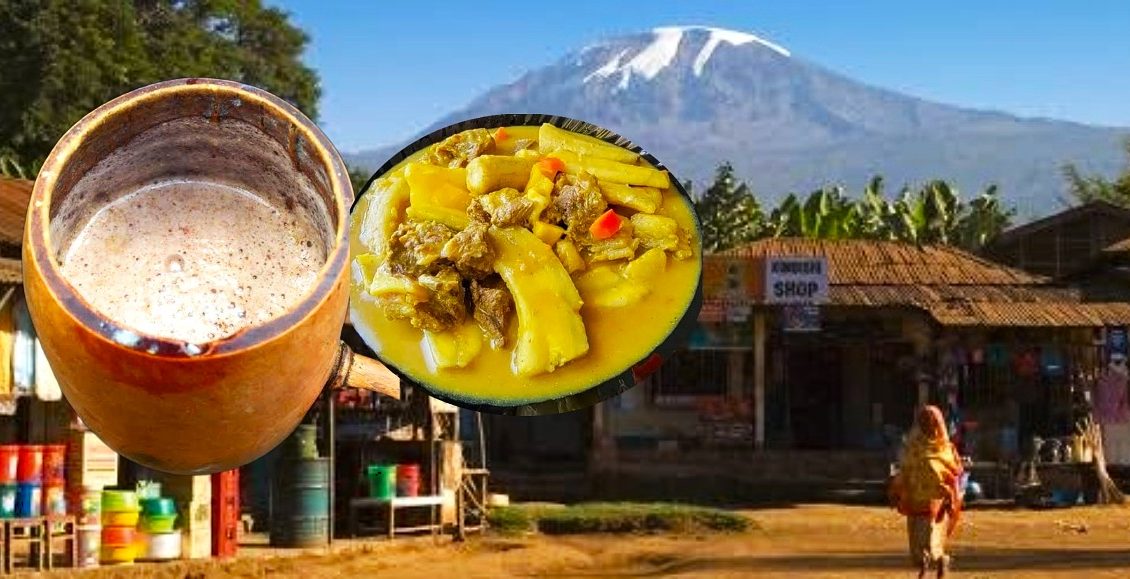
Go ahead, take that sip of Mbege without feeling guilty. Scientists have discovered that the traditional beer to gether with a dish of ‘Ndizi,’ that is cooked bananas, and boiled maize can actually increase your lifespan
For years, the Mediterranean diet has been celebrated as the gold standard for longevity and health, with its emphasis on fresh vegetables, lean fish, and healthy fats.
But now, a new contender has emerged from Tanzania, precisely the slopes of Mount Kilimanjaro.
Could the Kilimanjaro Diet be the next big international thing in the quest for a longer, healthier life?
Named after the iconic Africa’s highest peak, the Kilimanjaro diet is the latest invention to keep one young health and extend life.
Kilimanjaro dish has recently caught the attention of international researchers for its potential to promote better health and longevity.
According to a recent study conducted by Dutch researchers, nutritionists and medical experts, people in Tanzania, particularly those living on the slopes of the famous volcano, are healthier than their Western counterparts.
They also live longer because the food they eat is focused on traditional, unprocessed foods. In fact, even their cultural African Beer, Mbege, was found to be extremely healthy.
This discovery could challenge everything that people thought they knew about healthy eating.
The Kilimanjaro diet which has now become global sensation, consists of simple, whole foods like okra, plantains, kidney beans, and corn, all washed down the throat with a traditional fermented drink made from banana and millet called ‘Mbeke,’ or Mbege.
These foods, consumed by members of the Chaga community largely untouched by industrial processing, are rich in nutrients and seem to offer a powerful defense against inflammation – a root cause of many chronic diseases.
Dr. Quirijn de Mast, infectious disease specialist at Radboud University Medical Center in the Netherlands and lead author of the study, said, “Our study highlights the benefits of these traditional food products for inflammation and metabolic processes in the body.”
Dr. de Mast also added, “At the same time, we show how harmful an unhealthy Western diet can be.”

For the study, the researchers recruited 77 healthy Tanzanian men with an average age of 25.
Of these, 23 men who followed the Kilimanjaro diet were asked to switch to a typical western diet for two weeks, which included foods like processed sausages, white bread and fries. On the other hand, 22 men who ate western meals were asked to follow the Kilimanjaro diet for two weeks.
And another 22 men who followed the western diet were also asked to drink one serving of mbege every day for a week. Lastly, five men who maintained their normal diets were used as controls.
The study conducted in association with the Kilimanjaro Christian Medical Center (KCMC) was called Immune and metabolic effects of African heritage diets versus Western diets in men: a randomized controlled trial