




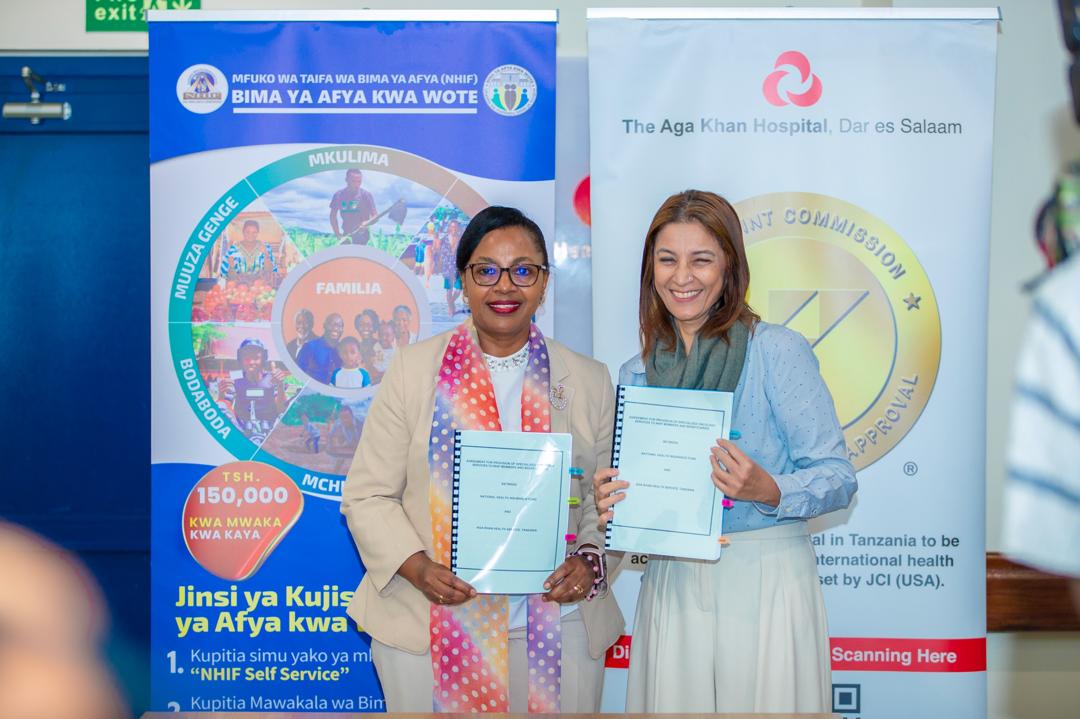
Tanzanians with cancer complications who are covered by the National Health Insurance Fund (NHIF) can now access specialized treatment at Aga Khan hospitals.
This follows an agreement between Tanzania’s social health insurance programme and the multispecialty hospital for the rollout of cancer treatment services to patients covered under the scheme.
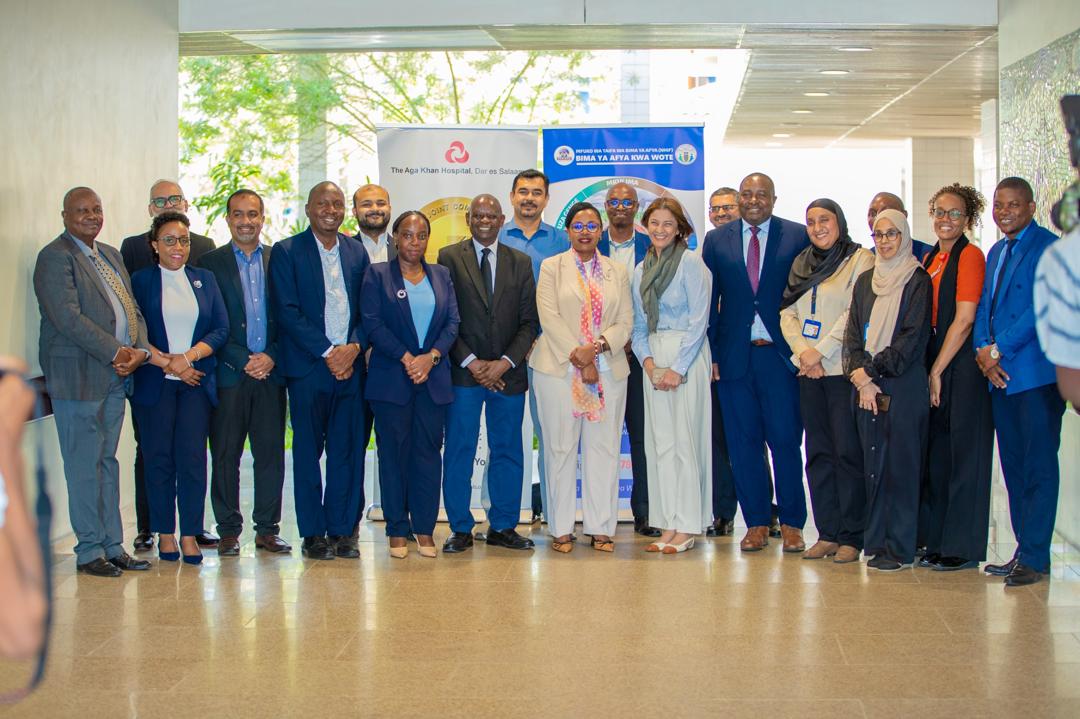
The Memorandum of Understanding (MoU) was signed between NHIF Director General Dr Irene Isaka and the Aga Khan Chief Executive Officer (CEO) for East Africa, Dr Zeenat Sulaiman.

The development is geared towards expanding access to specialised medical services among registered NHIF members, according to Dr Irene.
With the signed MoU, she noted, cancer patients covered by NHIF can now access treatment at the Aga Khan Hospital in Dar es Salaam, its facility in Mwanza, as well as 14 other related clinics available across the country.
The signing of the crucial medical deal reflects the longstanding cooperation between the two institutions while strengthening access to specialised cancer services at a time when the Government is working towards achieving universal health coverage.
CANCER TREATMENT IN TANZANIA
Tanzania has made significant progress in cancer prevention, screening and treatment as a result of investments made by the Government under the leadership of President Dr Samia Suluhu Hassan.
In his recent address at the IAEA Scientific Forum in Vienna, Austria, Tanzania’s Vice President, Mr Deogratius Ndejembi, said the country aims to become a hub for cancer treatment expertise and training for countries in sub-Saharan Africa.
Among the achievements recorded, he said, is an increase in HPV vaccination coverage among girls aged 9–14, from 58 per cent in 2018 to 98 per cent in 2026.
Meanwhile, the number of radiotherapy cancer treatment centres has increased from three in 2020 to six in 2026, while the Government has also expanded access to modern diagnostic and treatment technologies, including PET-Scan, MRI, LINAC, CT scans and mammography.
Tanzania aims to establish nine comprehensive cancer care centres across six strategic zones in Mainland Tanzania and Zanzibar by 2030.
The Vice President called on the IAEA and international partners to continue supporting Tanzania through the Rays of Hope initiative, as well as to designate the Ocean Road Cancer Institute as a Cancer Centre of Excellence for training and capacity building of African health professionals.
The initiative is aimed at strengthening Tanzania’s position as a hub for cancer care, expertise and modern cancer treatment technologies in sub-Saharan Africa.