

By Lilian Magari
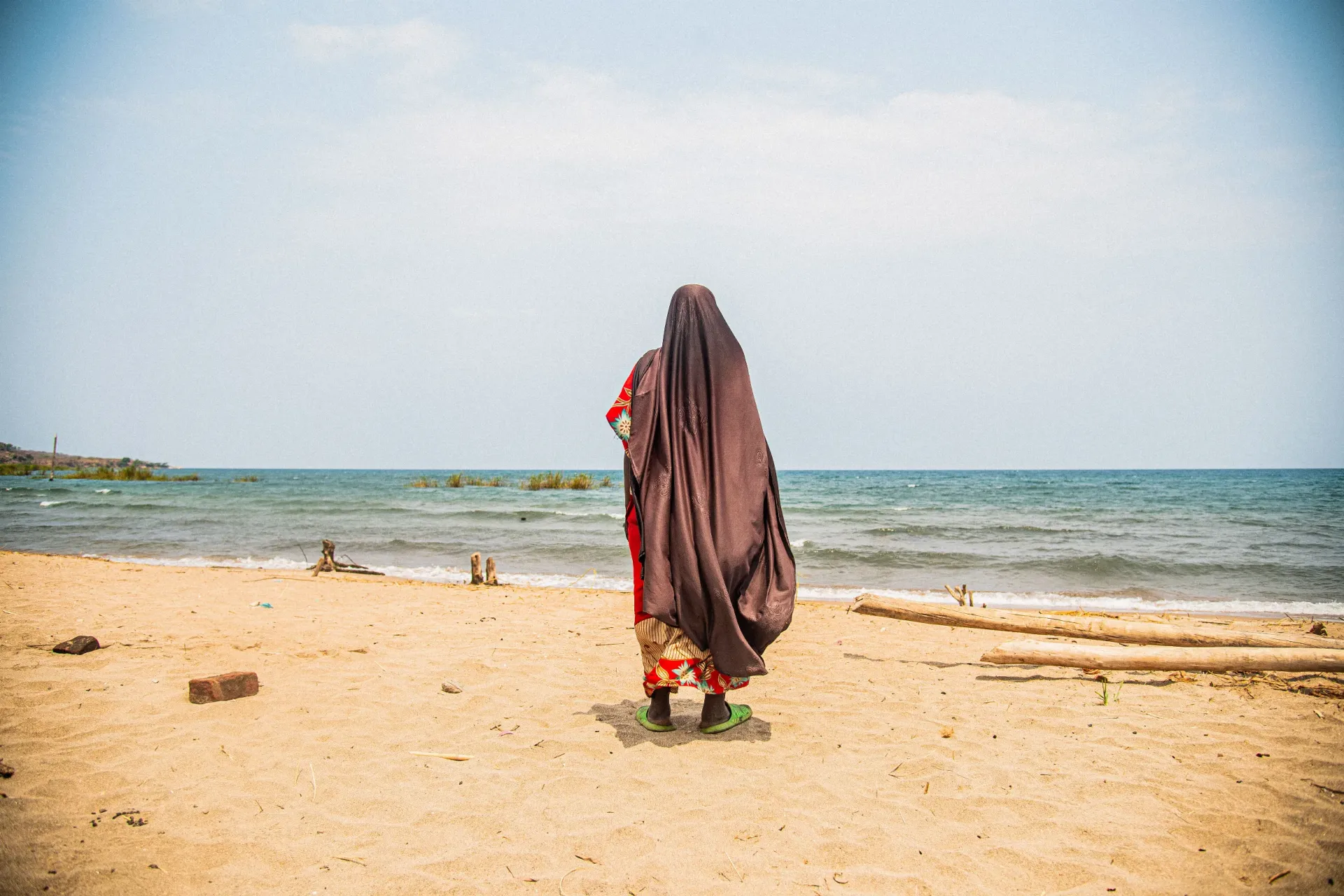
The waves of Lake Tanganyika crash gently along the shorelines of Buhingu Village in Kigoma Region, their rhythm both familiar and haunting.
Each wave carries a story of life, of loss, and of resilience.
For Mwasiti, those waves are a constant reminder of the day she looked at death right in the eye.
One October evening in 2015, as the sun dipped behind the mountains, she and her husband went to the lake to fetch water.
“Whilst there, I bent down to splash some water on my face,” she recalls softly.
“Then, I felt a sharp pull.”
In an instant, she felt the grip of a crocodile’s jaws closing around her arm. Her screams pierced the still air.
Her husband, hearing her cries, rushed to help, grabbing the crocodile’s tail and fighting to free her. Somehow, against all odds, she survived. The scars on her arms and face tell the story of what so many others in Buhingu could not escape.
The scars on Mwasiti’s arm and face are a lasting reminder of her encounter with a crocodile. “I am the only one who has survived an encounter with a crocodile in our village,” she says quietly. “We have lost many people, including three children, just last year.”
This was almost 10 years ago, and today, the people of Buhingu no longer have to risk their lives for water as a result of the Buhingu Multi-Village Water Supply System built with funding support from the Grundfos Foundation.
it was accomplished in collaboration with United Nations Children’s Fund (UNICEF) and Rural Water Supply and Sanitation Agency (RUWASA).
The solar-powered and gravity-fed system (which uses pumps to lift water into high storage tanks and then relies on gravity to distribute it downhill) now delivers safe and clean water to more than 55,700 people across seven remote communities: Buhingu, Kalilani, Katumbi, Lagosa, Mgambo, Nkonkwa, and Rukoma.
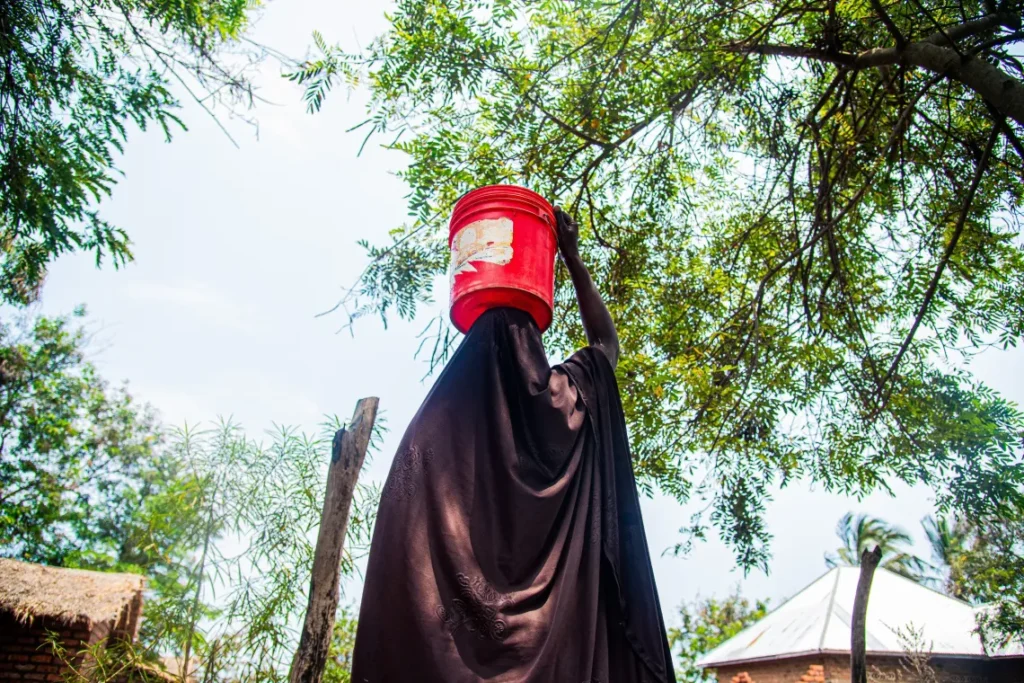
The system includes a 150,000-litre well, a 500,000-litre main storage tank, and over 33 kilometres of pipeline reaching schools, health centres, and homes.
But beyond the infrastructure lies something deeper: local ownership and a shared responsibility.
“This water belongs to us,” says Mwasiti, who is part of the Buhingu Community-Based Water Supply Organization (CBWSO). A legally recognized community body that manages and maintains the system. “After what I went through, I wanted to play my part to make sure no one else suffers because of water.”
As a volunteer member who was voted in by her community, Mwasiti focuses on ensuring that women and marginalised groups are included in decision-making. “Women play a big role in managing water at home, so they must also be part of the team,” says Mwasiti.
The Chairperson of the CBWSO, Shabani, also carries his own painful connection to the lake. Five years ago, his twelve-year-old son went swimming and never came home.
His body was never found.
“Everything has changed for me. He was my only son,” he says quietly. “Since then, I have made it my mission to protect others from the same pain.”
Now, Shabani oversees the daily operations of the water system. Every morning, he visits the main storage tank to check water levels and speak with the system operators.
His role is to make sure everything runs smoothly, from the pumps to the public taps, working closely with the system operators and tap attendants to ensure that every village has a reliable water supply.
“People contribute small amounts, we keep records, and we make sure the water keeps flowing. When the community feels like they own something, they take care of it,” says Shabani.
Each household contributes a small monthly fee to support system maintenance —TZS 7,000 (just under US$3) for solar-powered systems and TZS 5,000 (approximately US$2) for gravity-fed systems — paid through their mobile phone or at local kiosk shops using government control numbers to ensure transparency
Shabani and his team have also been trained how to maintain the system, budget for repairs, and promote hygiene and safe water practices across the villages.
Still, he admits, it’s not without challenges.
“Sometimes families can’t pay their contribution on time,” he says. “But we don’t give up. We do what we can and keep moving because we know what’s at stake.”
At a nearby tap, children laugh as they fill their buckets, the water sparkling in the afternoon light. Watching them, Mwasiti smiles.
For years, these moments came with fear — of crocodile attacks, of unsafe water, of water-borne diseases. Today, clean water means children are safer, healthier, and free to simply be children again.
“Before, the sound of water meant danger,” says Mwasiti softly. “Now, when I hear the water flow in our taps, I feel at peace. I survived, and so did our community.”