



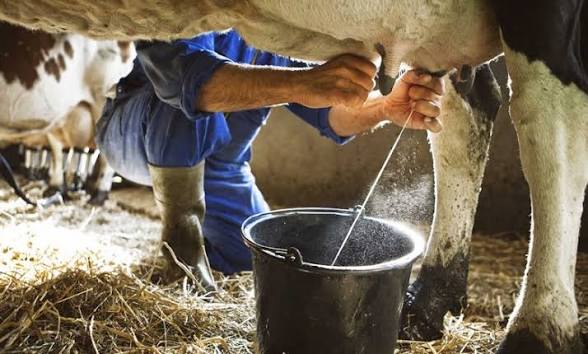
STAKEHOLDERS in Tanzania’s dairy farming sector, including the international development partners, are bridging up efforts to assist local dairy farmers to improve productivity in milk production.
A robust 10- year project, dubbed “Tropical Dairy Genetic Gains” (TDGG), is being implemented by the International Livestock Research Institute (ILRI) and the Tanzania Livestock Research Institute (TALIRI).
However, the National Artificial Insemination Center (NAIC) and Local Government Authorities (LGAs) stands as key partners in the implementation of the timely initiative.
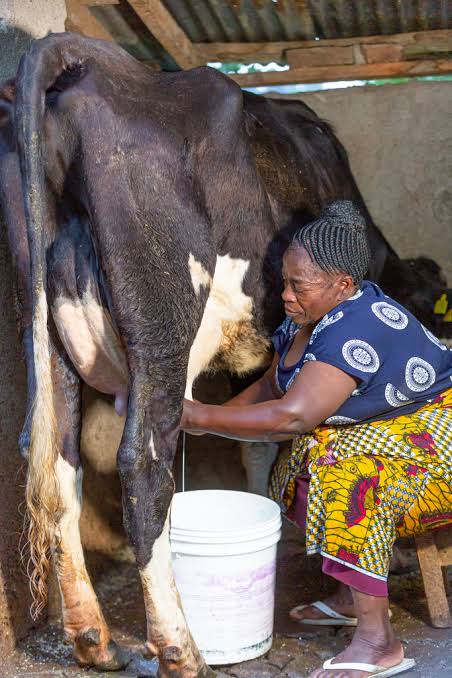
Briefing over the project at the ongoing Nanenane Agricultural Festival in Dodoma Capital City, the project’s Research Associate- Data Analyst, Ms Neema Kelya, detailed that, the initiative which covers 24 councils within seven regions, have so far reached out to a over 27,000 dairy farmers, and more than 72,000 cattle.
She noted, the project which commenced in 2016 works to improve dairy cattle breeds, and milk value addition in the country’s dairy sector.
Through the project, milk production records of each beneficiary farmer is captured and stored through the tailor- made digital system.
” We have developed special App, called TDGG App, through which farmers can use their smartphones to download it and get vital information on milk production, value addition, diseases and vaccinations,” she said.
She added that, the useful digital comprises specific platforms for the smallholder and larger scale farmers to get vital information over the daily professional management of their cattle.
Apart to benefiting the farmers, the information processed also assist the government to trace over the daily development of the sector across the project’s coverage regions.
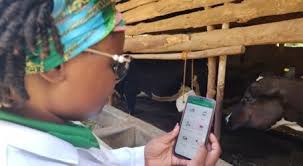
She said the system, brings together all key players in the sector under the same roof, ranging from dairy farmers, extensional officers, breed producers and sellers, and others.
Among the vital activities in the project, according to her, is to the testing of dairy cow’s genetics to verify quality of their breeds.
With the main focus being to empower the smallholder dairy farmers, the initiative works to improve milk production to both, indigenous and improved cattle.
“The local cows, if taken good care, especially in terms of feeds and other key supplements, can produce enough milk,” she insisted.
In general, the project supports a farmer- focused partnership that routinely records on farm- performance, and genetic infomation on dairy cattle and digitally shares feedback of results of such data and disserminates related farmers education messages to the farmers.
The data generated is analyzed and the results and summaries are being used by farmers to inform herd management decisions, as well as to linking the farmers to key breeding and animal health service providers, leading to sustained and significant animal and herd productivity gains as well as contributing towards more income for, higher profits to smallholder dairy farmers.