




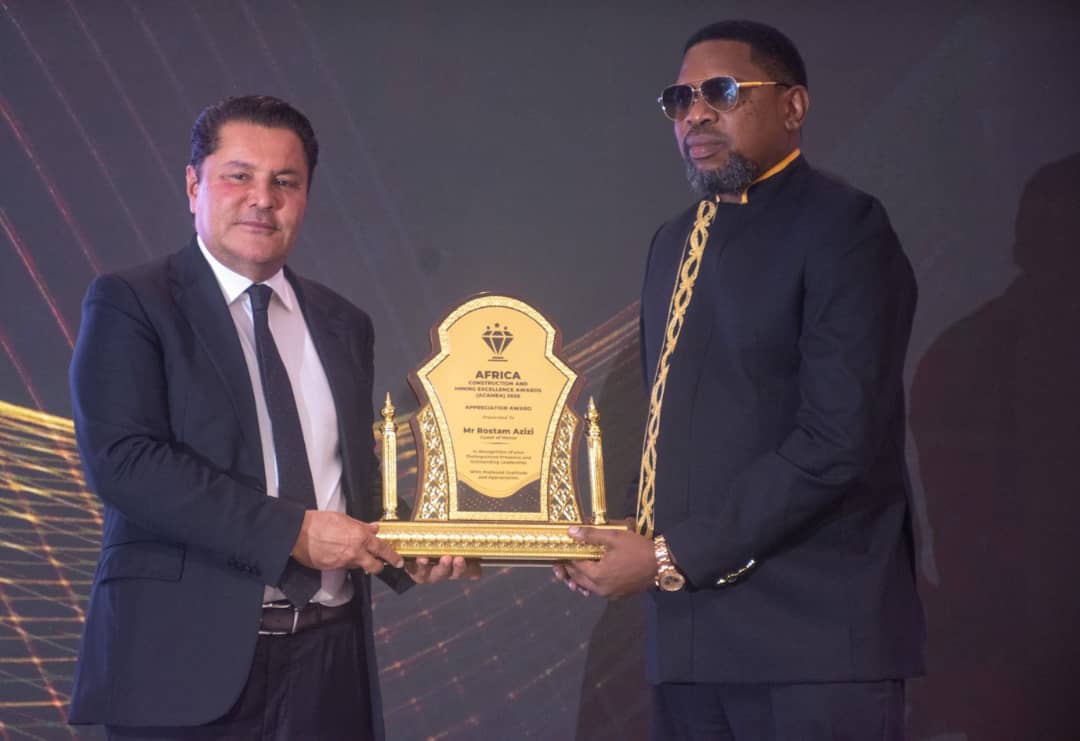
A Prominent Businessman and Taifa Group Chairman, Mr Rostam Azizi has called on the government and various stakeholders to prioritise the empowerment of Tanzanians so that they can take greater ownership of the country’s economy.
He said the Ministry of Minerals had already begun implementing and enforcing measures aimed at enabling Tanzanians to participate in and benefit from the mining sector through local content regulations, which promote Tanzanian participation across the mining value chain.
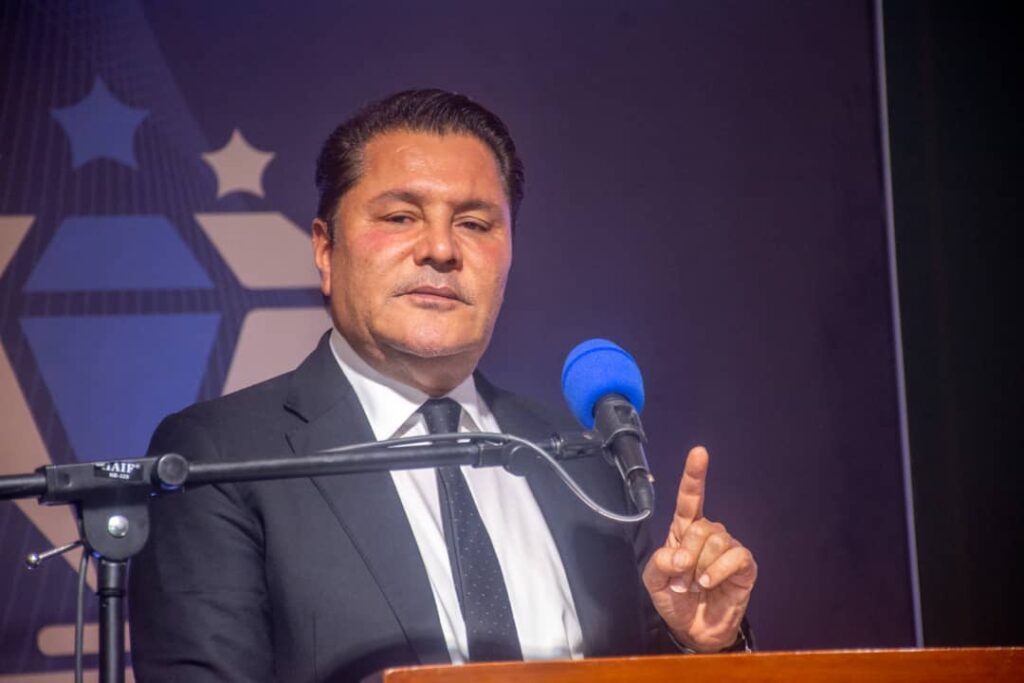
Speaking at the African Construction and Mining Excellence Awards (ACAMEA) 2026 ceremony held in Dar es Salaam, where he was the guest of honour, Azizi said Tanzania had numerous opportunities, particularly in mining and the construction of major infrastructure projects.
He said the country also had a large population of young people with the skills, energy and willingness to work, but warned that without creating a conducive environment, these opportunities would not sufficiently benefit Tanzanian youth and the country would fail to develop strong local companies.
Azizi said empowering Tanzanians was not the responsibility of the Government alone, but required the involvement of the private sector, financial institutions, contractors and local professionals.
“The Government has a role to play by establishing enabling policies and creating an environment that provides equal opportunities for all. Financial institutions have a role in facilitating access to capital. Our companies, meanwhile, have a responsibility to build capacity, maintain quality and carry out their work with integrity,” he said.
Azizi said the country should not be satisfied with building roads without simultaneously developing local contractors, or constructing railways without building companies capable of executing major projects.
He also said Tanzania should not simply extract minerals without building the capacity of Tanzanians to own a greater share of the economic value generated from those resources.
“As we celebrate the winners of ACAMEA today, let us also celebrate their potential to achieve even greater things in the future. We should ask ourselves, as the Government, investors and leaders in these sectors, what are we doing to ensure that this capacity does not end here?
“The infrastructure we are building today will be a legacy for future generations. But the greatest legacy will be the ability of Tanzanians to build, own and develop their own economy,” he emphasised.

Azizi said the country should ask itself a number of questions regarding the major projects currently being implemented, including roads, railways, bridges, dams and other large infrastructure projects.
“Are we building large Tanzanian companies? Of the huge amounts of money being spent on these projects, how many Tanzanian companies have grown? How many contractors have developed new capacities? And what expertise will remain in the country for future projects?” he asked.
He stressed that development was not simply about completing projects, but also about building the capacity of Tanzanians to execute such projects themselves.
Azizi questioned why, if the Ministry of Minerals had taken deliberate measures to protect and empower Tanzanians, similar steps could not be taken in the construction sector and other areas of the economy.
He said minerals should not be viewed merely as a source of government revenue and employment, but also as an opportunity to build strong Tanzanian companies, industries, technological capacity, professional expertise and capital that would continue generating value even after mineral resources were exhausted.
“The value of minerals is not only in what we extract from the ground. It is also found in engineering, machinery, technology, management and businesses surrounding mining activities. These are opportunities that Tanzanians should utilise to build the capacity of their companies,” he said.
Azizi commended the Government, through the Ministry of Minerals, for measures it had taken to strengthen Tanzanian participation in the sector through policies, laws and regulations governing local participation across the mining value chain.
 He specifically referred to the 2025 amendments, which he said continued to expand opportunities for Tanzanian companies to participate in mining operations and various services associated with mines.
Azizi also called for an end to the perception that Tanzanian companies were incapable of undertaking major projects.
He said companies did not grow simply by wishing to grow, but by securing contracts, gaining experience, accumulating capital and investing in their businesses.
However, he said, for a company to secure work, someone must first believe that it has the ability to deliver.
“And this is where the problem lies, because Tanzanians do not trust one another,” he said.
Azizi acknowledged that not every Tanzanian company had the capacity to execute every major project.
“Major projects require expertise, capital, technology and high-level management. There is no dispute about that. But that does not mean there are no Tanzanian companies with the capacity to undertake such projects.
“Where capacity is insufficient, we should have a strategy to build it. If machinery is needed, it can be purchased or leased. Experts can be employed. Technology can be acquired. Partnerships can be established. Experience is built through doing the work.
“We cannot continue saying that our contractors lack capacity while denying them opportunities to build that capacity. Experience does not come from waiting. It comes from doing,” he said.
Contractors should be judged by capacity, not nationality
On the selection of contractors to implement major projects in the country, Azizi advised that a contractor’s capacity should not be judged by their name, nationality or the language they speak.
Instead, he said, contractors should be assessed based on the qualifications of their professionals, financial capacity, track record, safety standards and quality of work.
He urged stakeholders not to underestimate Tanzanian contractors simply because they speak Kiswahili or assume that foreign contractors are more capable simply because they speak a foreign language.
“Here, I ask not to be misunderstood,” he said.
Azizi said he was not opposed to foreign companies, noting that they had an important role to play and brought expertise and technology that Tanzania needed.
However, he opposed the perception that a company was capable simply because it was foreign, while a Tanzanian company was considered incapable simply because it was Tanzanian.
He said the Government was spending substantial amounts of money on infrastructure development, yet a large proportion of major contracts continued to be implemented by foreign companies.
Meanwhile, many local contractors were left with smaller assignments, a situation he said prevented them from growing.
He also pointed to delayed payments after contractors had completed their work, saying this was putting capable companies at risk of collapse.
Azizi said strengthening Tanzanian companies required policies and a legal framework that provided local contractors with genuine opportunities, protected fair competition and helped them build the capacity to execute major projects.
“Let us not build a trillion-dollar economy in which our young people are merely spectators. Let us build an economy in which these young people are participants, leaders and owners.
“Because the future of our economy will not depend only on the level of investment we attract, but also on the ability of Tanzanians to participate in, lead and own a share of that economy,” he emphasised.
Azizi congratulated the winners of the ACAMEA awards and called for the platform to continue connecting capable companies with project opportunities, financial institutions, technology and partners who could help them grow.
“I would like to see, in the coming years, the companies we are recognising here today having grown, possessing greater capital, employing more Tanzanians and having the capacity to execute even larger projects,” he said.
ACAMEA brings together mining and construction stakeholders.
Speaking earlier, the Chairman of Marketing and Capital Mobilisation at the Tanzania Mining Sector Trustees Association (TAMISA), Dr Sebastian Ndege, said the event brought together various stakeholders, including representatives from mining institutions, financial institutions and other organisations.
Among those represented were Taifa Group, NMB, Clouds Media, TPSF and Blue Coast, among others.
Dr Ndege said the event brought together two key sectors: mining and construction.
“Mining provides the resources, while construction puts those resources into use. As we move towards greater excellence, we are celebrating all of this,” he said.
Tanzania Mining Industry Suppliers Association (TAMISA) was inspired by 6th Phase government’s political will to ensure vibrant, equitable and sustainable social-economic development through local content enhancement.
Henceforth TAMISA was established to foster collaboration, innovation, and sustainable practices, TAMISA serves as a pivotal platform for suppliers to connect, share knowledge, and influence industry standards.