




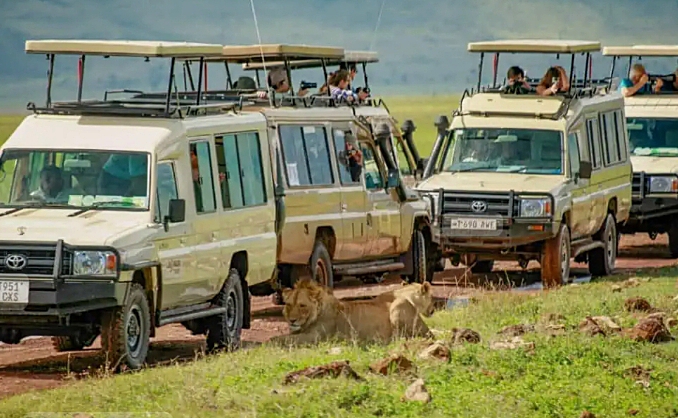
Growing tourist numbers in Tanzania’s national parks have translated into a major boost in conservation revenue, with collections by the Tanzania National Parks Authority (TANAPA) more than tripling over five years to reach 534bn/- in the 2025/2026 financial year.
The remarkable performance reflects the country’s growing attractiveness as a global tourism destination, with tourist arrivals in national parks more than doubling from 708,319 in 2021/2022 to 1,559,641 in 2025/2026, representing average annual growth of about 24 per cent.
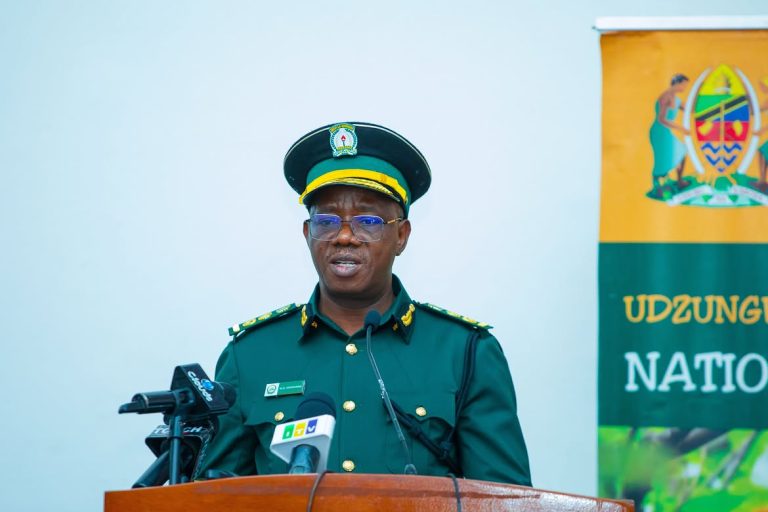
According to TANAPA Conservation Commissioner, Mr Massana Mwishawa, the increase in visitors has been accompanied by an even stronger rise in revenue, which climbed from 174bn/- in 2021/2022 to 534bn/- in 2025/2026, representing average annual growth of approximately 40 per cent.
He said the figures demonstrated the growing contribution of tourism to conservation financing and the country’s wider economic development.
He attributed the impressive growth partly to the recovery of the tourism industry following the devastating effects of the Covid-19 pandemic, which significantly affected tourist arrivals and earnings in 2021.
He also credited President Samia Suluhu Hassan’s efforts to promote Tanzania’s tourism attractions internationally through the Royal Tour documentary, saying the initiative helped raise the country’s global profile and attract more visitors to national parks.
Beyond the recovery of international tourism, TANAPA has continued to make efforts to expand domestic tourism, although the segment has recorded mixed performance in recent years.
The number of local visitors increased from 325,060 in 2023/2024 to 412,983 in 2024/2025 before declining to 381,341 in 2025/2026.
Mr Mwishawa said the improved performance was also supported by strengthened conservation initiatives, better relations with neighbouring communities and increased investment in tourism and conservation infrastructure.
Beyond the tourism gains, TANAPA intensified wildlife protection through increased patrols and investment in modern surveillance equipment.
Mr Mwishawa said the authority conducted 301,314 patrols out of 314,940 planned operations, resulting in the arrest of 30,559 suspected poachers in connection with 25,006 poaching incidents.
“We also confiscated 65,860 livestock found illegally inside national parks, seized 105 firearms and removed 10,971 wire snares,” he said.
He said conservation interventions had contributed to the recovery of some endangered and rare species, with the rhino population increasing from 128 in 2021 to an estimated 170 in 2026.
The number of habituated chimpanzees also rose from 196 to 288 during the same period.
“Efforts to restore the African wild dog population are also continuing, with 12 animals currently in a breeding area in Mkomazi National Park and 25 released into their natural habitats,” he said.
To strengthen surveillance and improve wildlife protection, he said the government facilitated the acquisition of 40 drones for aerial patrols and real-time monitoring.
TANAPA also constructed three modern communication facilities and 10 radio towers in Serengeti, Lake Manyara, Tarangire and Mkomazi national parks.
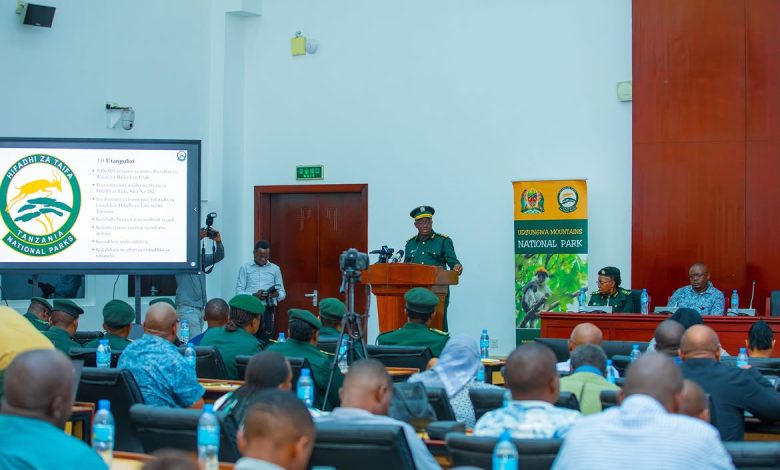
On ecosystem restoration, Mr Mwishawa said the authority controlled invasive plant species across 9,440.22 hectares in 15 national parks and cleared 1,546 hectares of bush-affected land in Lake Manyara.
It also invested in water infrastructure to help wildlife withstand drought, including drilling eight boreholes, constructing six dams, rehabilitating 19 others and clearing obstructions from seven water-source channels. In Ruaha National Park, sand was excavated from 36 dams.
The authority also intensified efforts to address human-wildlife conflicts, handling 2,194 incidents reported in 260 villages.
Mr Mwishawa said TANAPA conducted 1,403 patrols to prevent attacks and destruction by dangerous and destructive wildlife, while drones were increasingly being used to improve response times.
Community engagement was another area of focus, with the authority conducting 500 meetings in 319 villages, reaching 47,947 people living near national parks.
In diversifying tourism products, Mr Mwishawa said TANAPA introduced new activities, including hot-air balloon safaris, rhino tourism, horseback riding, sport fishing, hot spa services in Ruaha, astronomy tourism and scenic flights in Kilimanjaro, Arusha and Lake Manyara national parks.
The authority also strengthened sports tourism through the completion and launch of a golf course at Fort Ikoma in the Serengeti ecosystem, alongside packages combining golf and wildlife safaris.
He said investment in accommodation facilities had significantly expanded tourism capacity, with the number of beds increasing from 5,755 in 2021 to 12,094 in 2026 across lodges, permanent and seasonal camps, community camps and hostels.
“To attract further private-sector investment, TANAPA has identified 160 new investment sites, comprising 30 lodge sites and 130 camping sites,” he said.
Mr Mwishawa said relations with neighbouring communities had also improved through support for social infrastructure, including six ranger posts, a village office, two traditional healer houses, three dispensaries, a teachers’ house, a girls’ dormitory and two classrooms.