




Tanzania and the Sultanate of Oman have renewed their commitment to strengthening economic and investment cooperation, with a focus on translating longstanding historical relations into concrete joint projects across key sectors of their economies.
The commitment was reaffirmed during the third session of the Omani-Tanzanian Joint Committee held in Zanzibar, bringing together senior government officials from both countries to review existing cooperation, address implementation challenges and explore new investment opportunities.
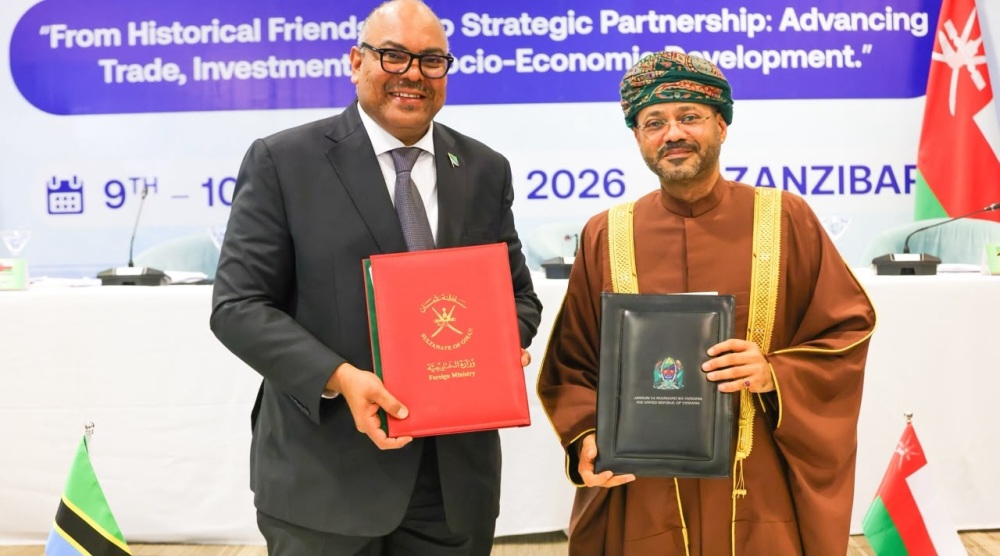
The meeting was co-chaired by Oman’s Foreign Minister, Sayyid Badr bin Hamad al Busaidi, and Tanzania’s Minister for Foreign Affairs and East African Cooperation, Dr Mahmoud Thabit Kombo.
Opening the proceedings, Mr Sayyid Badr underscored the historical, cultural and human ties that have connected Oman and Tanzania for generations, describing their shared civilisational heritage as a strong foundation for expanding bilateral relations.
He emphasised the need to build on the achievements of previous engagements, particularly the official visit by President Samia Suluhu Hassan to Oman in June 2022, during which the two countries concluded several agreements and memoranda of understanding.
He said priority should now be given to ensuring that the agreements translate into practical programmes and joint projects capable of delivering tangible economic benefits to both countries.
Oman, he added, is keen to expand trade and investment cooperation, strengthen engagement between the two countries’ business communities and promote joint ventures in agriculture, fisheries, transport, tourism and logistics.
He also identified emerging areas of cooperation, including education, financial technology, cybersecurity, artificial intelligence and entrepreneurship, as potential drivers of a broader and more diversified partnership.
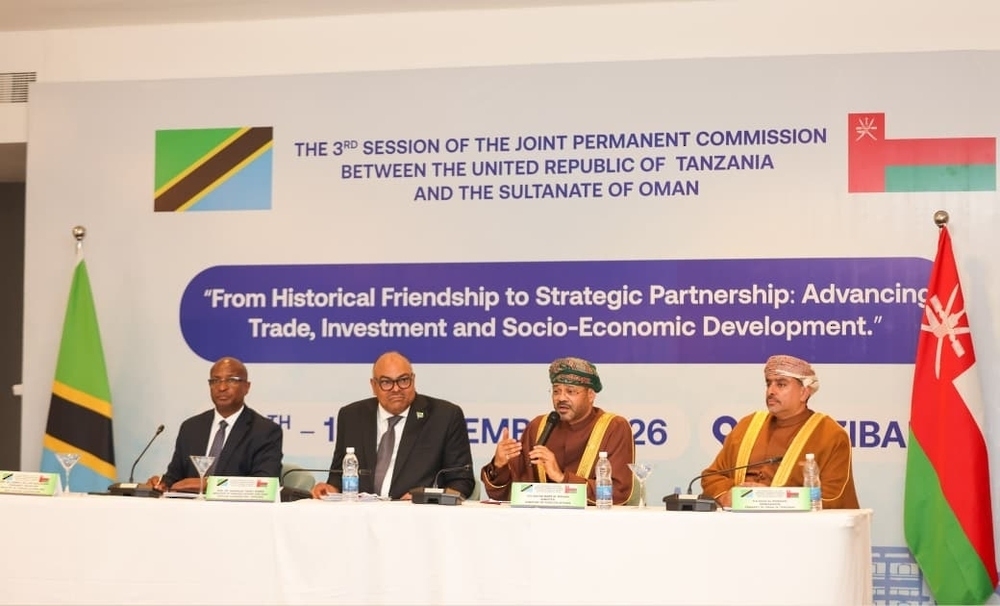
On his part, Dr Kombo reaffirmed Tanzania’s commitment to deepening its longstanding relations with Oman, noting that the two countries have considerable economic and investment potential that could be harnessed through stronger bilateral cooperation.
He highlighted the importance of the Joint Committee as a platform for monitoring the implementation of existing agreements, addressing obstacles affecting joint projects and identifying practical ways of strengthening partnerships in strategic sectors.
He said closer cooperation would contribute to the development priorities of both countries while creating greater benefits for their respective populations.
During the session, the two delegations reviewed the progress of bilateral cooperation and the implementation of resolutions from previous meetings.
They also explored opportunities for expanding collaboration in trade, investment, agriculture, livestock, fisheries, the blue economy, energy, minerals, transport, infrastructure, education and tourism, alongside labour affairs, archival cooperation and diplomatic training.
To ensure that the discussions translate into measurable results, the two sides agreed on the importance of establishing practical follow-up mechanisms, including a joint working team and designated focal points to coordinate implementation.
They further emphasised the need for a comprehensive roadmap containing executive programmes for priority projects and areas of cooperation, aligned with Oman’s Vision 2040 and Tanzania’s Development Vision 2050.
A major outcome of the meeting was the signing of the minutes of the third Joint Committee session by the two foreign ministers, alongside two memoranda of understanding.
The agreements cover mutual recognition of seafarers’ certificates and cooperation in diplomatic training, marking further progress in strengthening institutional and sector-specific relations between the two countries.
Investment Cooperation Takes Centre Stage
In a separate engagement held on the sidelines of the Joint Committee meeting, Sayyid Badr met Dr Kombo and a delegation of Tanzanian ministers and senior government officials to discuss opportunities for broadening economic and investment partnerships.
The Tanzanian delegation included Professor Kitila Mkumbo, Minister of State in the President’s Office for Planning and Investment; Anthony Mavunde, Minister for Minerals; and Professor Makame Mnyaa Mbarawa, Minister for Transport.
Deputy ministers responsible for agriculture, livestock, fisheries and energy also attended, alongside other senior government officials.
The discussions focused on identifying investment opportunities and strengthening partnerships in minerals, transport, infrastructure, agriculture, livestock, fisheries and energy.
Both sides stressed the importance of closer coordination among relevant government institutions to facilitate the implementation of Joint Committee resolutions, encourage joint investments and promote the exchange of technical knowledge and expertise.
The engagement also highlighted the potential for stronger private-sector participation in bilateral economic relations, particularly through joint ventures capable of unlocking opportunities in productive sectors.
The renewed commitment comes as both countries seek to leverage their longstanding historical connections to advance broader economic ambitions, with the two governments looking to align bilateral cooperation with their respective national development strategies.
Through stronger institutional coordination, practical implementation of agreements and expanded investment partnerships, Oman and Tanzania are seeking to move their relationship beyond historical and diplomatic ties towards a more commercially productive and mutually beneficial partnership.