



Mainland, Isle Sign Joint MoU To Boost Agricultural Research And Technology for Increased Food Production In Tanzania


Mainland Tanzania and Zanzibar are set to further strengthen their mutual collaboration in developing innovative, solution-based agricultural technologies to accelerate crop production on both sides of the Union.
With the aim of boosting food production, the new cooperation framework will enable agricultural experts from Mainland Tanzania and Zanzibar to work more closely, exchanging skills and expertise to enhance research, innovation and the development of cloud-connected agricultural technologies.
At the heart of this joint initiative is the vision of developing agricultural technologies that will help farmers in Mainland Tanzania and Zanzibar overcome the various challenges hampering on-farm production and productivity.
To ensure the strategy is implemented effectively, the Tanzania Agricultural Research Institute (TARI) has signed a formal memorandum of understanding (MoU) with the Zanzibar Agricultural and Livestock Research Institute (ZALIRI).
The agreement, which primarily targets increased food production, will initially focus on developing key research initiatives and relevant technologies for coconut, spices, post-harvest management and the effective use of Artificial Intelligence (AI) to develop cutting-edge agricultural technologies.
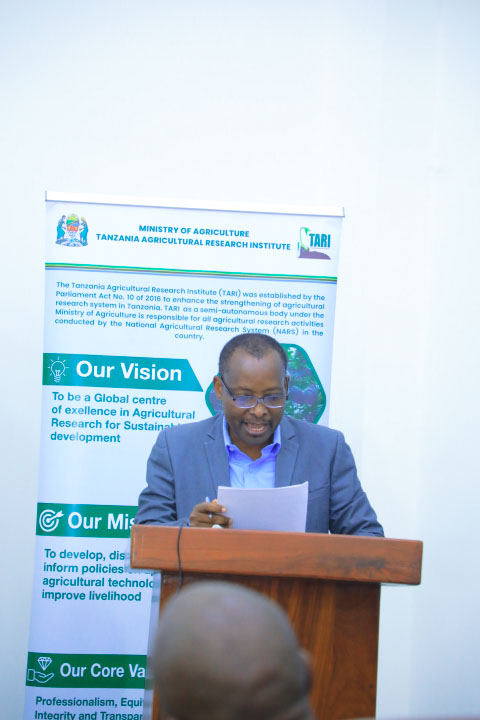
The MoU was signed in Dodoma on 15th October 2026 by TARI Director General, Dr Thomas Bwana, and his Zanzibar counterpart, Dr Abdalah Ibrahim.
Speaking shortly after the signing ceremony, Dr Bwana said TARI was pleased with the agreement with its Zanzibar counterpart, describing it as a crucial step towards improving agricultural performance in Mainland Tanzania and Zanzibar.
“TARI is highly committed to ensuring that this cooperation is mutually implemented to achieve its targeted results,” he said.
He noted that the partnership aimed to conduct research and develop innovative technologies to address challenges affecting crop production and productivity among farmers, thereby enhancing food security.
“So far, TARI has developed more than 350 agricultural technologies that are currently helping farmers overcome a range of on-farm challenges,” he said.
Dr Bwana said the two institutes would work closely to mobilise adequate financial resources to facilitate the implementation of key activities planned under the cooperation.

With a total land resource of 18,000 hectares and 20 well-equipped research centres across Tanzania, Dr Bwana expressed optimism that TARI would collaborate effectively with ZALIRI to achieve the objectives of the partnership.
For his part, ZALIRI Director General, Dr Abdalah Ibrahim, said the cooperation would help bridge existing gaps in agricultural research and technology in Zanzibar.
He said TARI had supported Zanzibar for years in strengthening its agricultural research capacity, noting that the agreement would give this positive trend fresh momentum.
“TARI is equipped with extensive, modern, cloud-connected laboratories compared with those available in Zanzibar. Through this partnership, our agricultural experts will have a good opportunity to come and use the facilities on the Mainland,” he said.
He added that the collaboration would also provide an opportunity for Zanzibar’s agricultural experts to acquire additional skills and expertise from their Mainland counterparts.
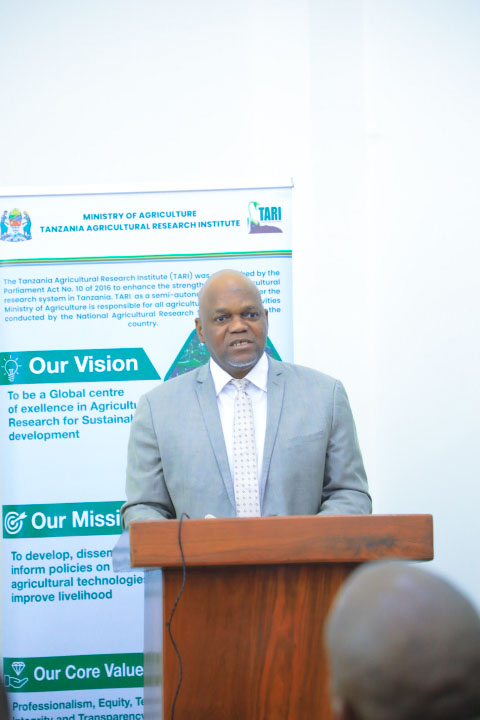
“I sincerely appreciate the strong support being provided by President Samia Suluhu Hassan to advance agricultural technology in Tanzania, particularly the installation of a modern laboratory in Mtumba, Dodoma,” he said.
He identified beans, rice, cassava and spices among the crops performing well on the Isles and expressed optimism that the MoU would help farmers in these subsectors achieve better results.