



President Samia Set To Grace Opening Of 12th Nairobi Convention Conference In Dar es Salaam

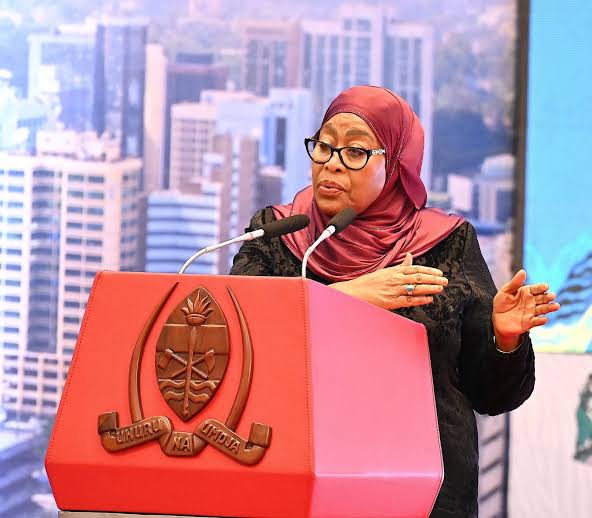
President Samia Suluhu Hassan is expected to grace the official opening of the 12th Conference of the Parties (COP12) to the Nairobi Convention, scheduled to take place from October 6 to 9, 2026, in Tanzania’s commercial capital, Dar es Salaam.
According to the conference schedule, Zanzibar President Dr Hussein Mwinyi is expected to officiate at its climax.
To be held under the theme, “Towards a Sustainable Blue Economy in the Western Indian Ocean for People and Nature: A 40-Year Journey,” the forum is expected to provide Tanzania with an opportunity to strengthen its environmental diplomacy and enhance its influence on marine and coastal issues at regional and international levels.
Moreover, the envisaged conference is expected to result in the formation of the Dar es Salaam Declaration, which will reinforce regional cooperation towards a sustainable blue economy.
Briefing the media on the forum, Minister of State in the Vice President’s Office (Union and Environment), Engineer Hamad Masauni, said it is expected to attract representatives from the 10 contracting parties to deliberate and agree on joint actions to address marine pollution, illegal fishing, climate change and the degradation of coastal ecosystems.
“Tanzania is set to take a leading role in shaping regional efforts to protect the Western Indian Ocean, attract investment in the blue economy and strengthen cooperation on marine conservation when it hosts a major international conference in Dar es Salaam this week,” he noted.
He expressed that, given the honour of hosting COP12, the country expects the meeting to strengthen its environmental diplomacy and enhance its influence on marine and coastal environmental issues at regional and international levels, while securing joint commitments and coordinated action to protect the ocean, combat illegal fishing, address ecosystem degradation and tackle the impacts of climate change.
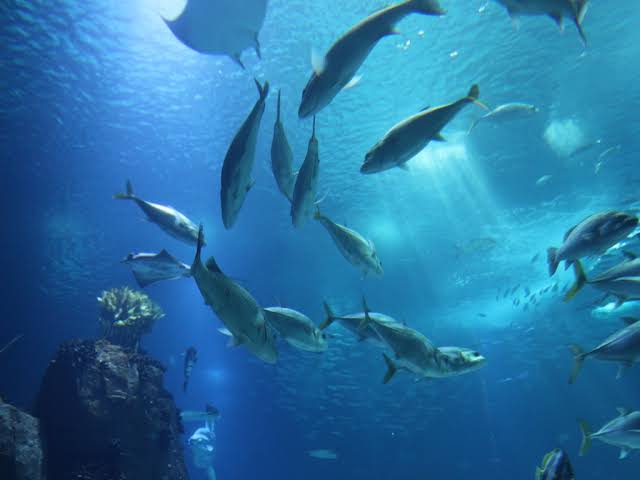
Minister Masauni informed that key issues on the agenda include marine and coastal pollution from land- and sea-based activities, regional cooperation in the conservation and management of marine ecosystems, climate-change resilience and the protection of marine biodiversity.
“The conference will also examine opportunities in the sustainable blue economy, including sustainable fisheries, aquaculture, marine tourism and maritime transport, while promoting investment that takes environmental considerations into account,” he added.
Eng Masauni said Tanzania also expects the meeting to strengthen scientific and technological cooperation, including the use of Marine Spatial Planning in decision-making based on scientific evidence.
“The conference is further expected to contribute to common regional positions on international issues such as the Biodiversity Beyond National Jurisdiction Agreement, which addresses the conservation and sustainable use of marine biodiversity in areas beyond national jurisdiction,” he said.
According to him, the expected outcomes include the adoption of decisions by the Conference of the Parties, a Joint Ministerial Declaration and the election of the leadership council for the 2026–2028 period.
He said the conference would also create opportunities for Tanzania and other countries in the region to attract finance, technology and environmentally responsible investment for marine and coastal conservation, climate action, pollution control and blue economy projects.
These opportunities, Eng Masauni detailed, include sustainable fisheries, aquaculture, marine tourism, maritime transport and investments that take environmental protection into account.
Implementation of the Nairobi Convention has contributed to increased community awareness of the sustainable use of marine and coastal resources, improved livelihoods among fishing communities and greater involvement of communities in mangrove restoration and conservation, the Minister observed.
He then cited mangrove restoration in the Rufiji Delta as one of the initiatives supporting the protection of fish breeding grounds, reducing coastal erosion and conserving resources relied upon by coastal communities.
“Efforts to reduce plastic waste, wastewater and other sources of marine pollution have contributed to improved marine and coastal environments,” he said.
The Nairobi Convention, administered by the United Nations Environment Programme (UNEP), brings together 10 contracting parties—Comoros, France, Kenya, Madagascar, Mauritius, Mozambique, Seychelles, Somalia, Tanzania and South Africa—to promote the sustainable management and use of the marine and coastal environment.
It provides a platform for governments, civil society and the private sector to collaborate in protecting and sustainably managing marine and coastal resources.