



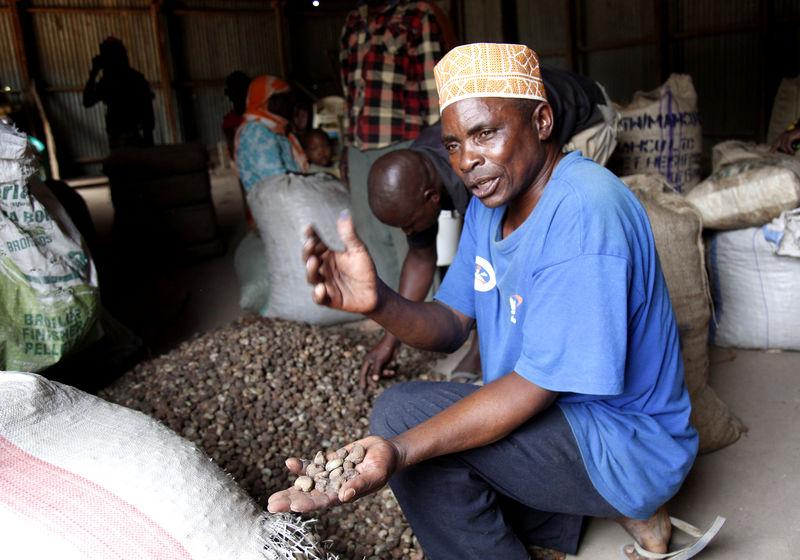
CASHEW farmers in Tanzania are set to receive strategic training clinics aimed at further improving production and productivity in the lucrative economic sector.
The development is intended to ensure that the country maintains and broadens its supremacy in the international cashew market through the production of high-quality nuts.
The envisaged training programme, to be rolled out by the Cashew Board of Tanzania (CBT), will focus on imparting growers with recommended agronomic practices, on-farm management, as well as proper drying and storage of cashew nuts.
Among others, the key objective behind the initiative is to enable growers to produce first- and second-class cashew nuts, with a Shelled Out-Turn (SHOT) of 44 per cent and above, and not below 35 per cent.
The CBT Director General, Mr Alfred Francis, told zanzibarnews that the board was highly committed to ensuring the production of quality cashew nuts.
“In the global cashew market, there are two main perspectives, quality and quantity, and for the board, we are rather dealing with quality,” he said.
He cited quality assurance as a key factor that has kept Tanzania at the helm of the global cashew market while enabling farmers to fetch competitive prices.
“During last year’s marketing season, prices stood at an average of 2,490/- per kilogramme for first-class cashew, while a kilogramme of second-class cashew was marketed at 1,872/-, which were among the best prices recorded in the international cashew market,” he observed.

He noted that the board was very vigilant in plugging all possible loopholes for the adulteration of nuts in the market, as well as preventing the negative practice of mixing cashew nuts from previous seasons or incorporating non-cashew items into the consignments.
“We are very serious to the extent of destroying (setting fire to) cashew nuts whose SHOT is below 35 per cent. This is one of the secrets behind our good performance in terms of prices,” he revealed.
Production of quality cashew nuts with high SHOT percentages, according to him, gives buyers assurance of obtaining good tonnages after processing, thereby attracting more buyers into the country.
In a further effort to ensure quality, Francis said the state-owned board had formed numerous professional teams to conduct thorough quality control of cashew nuts throughout the season.
“The teams work to control the quality of cashew nuts from the farmers’ Agricultural Marketing Cooperative Societies (AMCOs) markets, with the aim of assisting them to supply the market with the required quality nuts,” he explained.
He detailed that during the 2021/22 season, a total of 210,000 tonnes of cashew nuts were produced, while in the 2022/23 season, production stood at 189,000 tonnes.
However, over the next two consecutive seasons, production catapulted to 528,000 tonnes, while in the current season, farmers managed to scale up production to 619,000 tonnes.
“This impressive growth in Tanzania’s cashew production trend is attributed to a number of factors, including the government’s commitment to investing in the sector, farmers’ strong working morale, together with professional management by the board,” he said.
While the government’s move to finance key inputs in the sector motivated growers, Francis said CBT had also worked to provide cashew farmers with key services.
“The services include extension services and mentorship, while ensuring farmers are paid on time for their marketed produce,” he said.
The smooth collaboration towards empowering growers engaged in cashew production has made Tanzania’s cashew sector more competitive and stable, with a bright future, he noted.
The procurement of at least 100 modern mini-processing machines, with the capacity to process between 800 kilogramme and 1.8 tonnes of cashew nuts in eight hours, which are to be distributed to small scale farmers processing groups, is another milestone that the board has attained in boosting the performance of the sector.
“Value addition to cashew apart from broadening market base, is meaningful in both generating more profits and providing farmers with a necessary option on when to sell their nuts,” he added.