



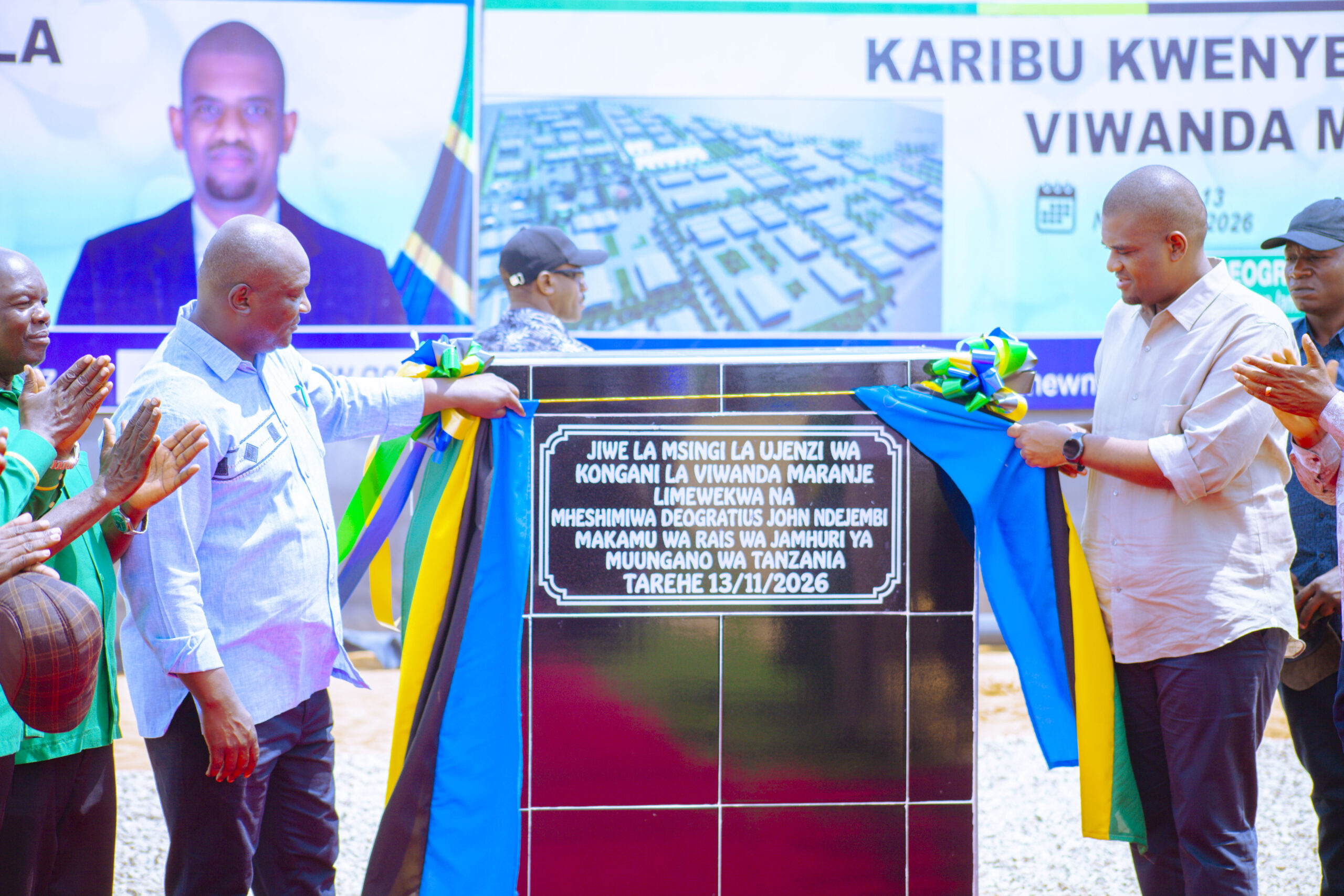
The Vice-President, Mr Deogratius Ndejembi, has officially laid the foundation stone for the construction of Maranje Industrial Park, a major agricultural produce processing hub expected to accelerate Tanzania’s cashew processing ambitions and unlock new economic opportunities.
Situated on 1,500 acres of land in Maranje Village, Nanyamba District Council, Mtwara Region in southern Tanzania, the industrial park is expected to play a significant role in helping the country achieve its much-needed cashew processing capacity, among other objectives.
Upon full completion, the investment will reinforce the ongoing strategy being implemented by the Cashewnut Board of Tanzania (CBT) to increase cashew processing and value addition.
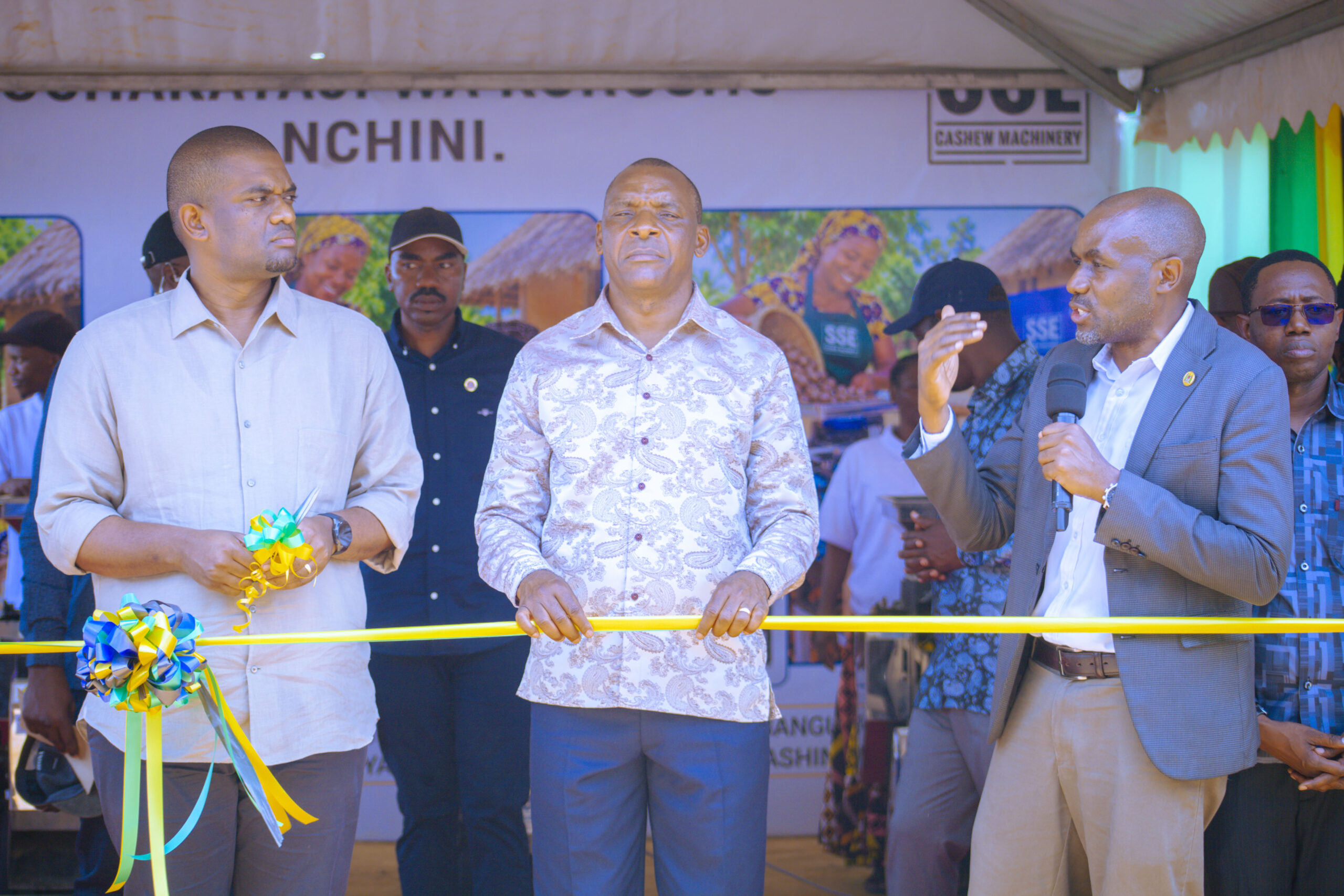
According to CBT Director General, Mr Francis Alfred, the envisaged large-scale cashew processing activities at the industrial park will enable Tanzania to take the cashew sector to new heights.
He said the industrial park covers 1,500 acres, of which 350 acres are already in use, while nine investors have expressed readiness to invest in the area.
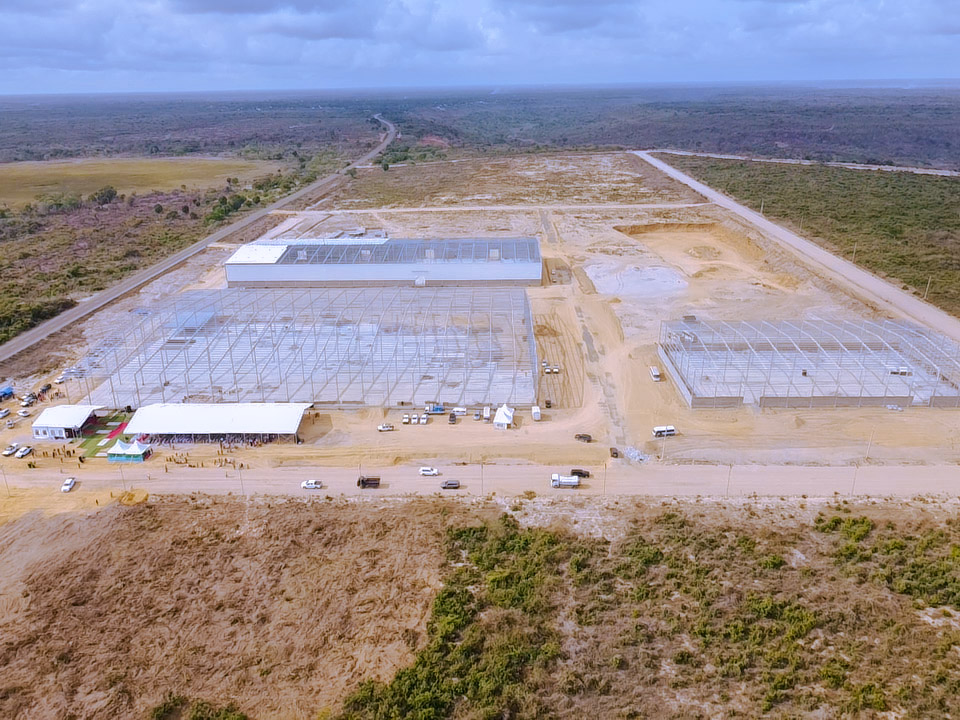
“We are working to finalise the construction of Maranje Industrial Park, an important hub for cashew processing, which is expected to accommodate several modern processing plants. The board has already constructed two warehouses, each with a capacity of 10,000 tonnes,” he explained.
The Ministry of Agriculture, through the Cashewnut Board of Tanzania, has facilitated the establishment of key infrastructure at the industrial park, starting with the development of 354 acres out of the total 1,572 acres, construction of roads and connection of electricity and water to the area.
The park has been registered with the Tanzania Investment and Special Economic Zones Authority (TISEZA) to enable prospective investors to benefit from the various tax incentives offered by the authority.
In addition, the Vice-President’s Office has issued a Strategic Environmental Assessment (SEA) certificate.
Other infrastructure already constructed includes two warehouses with a combined storage capacity of 20,000 tonnes and a weighbridge with a capacity of 80 tonnes.
The project aims to ensure that all cashew nuts produced in the country are processed by local industries by 2030, a move expected to increase the value of the crop, expand employment opportunities and strengthen the contribution of the cashew sector to Tanzania’s economic growth.
MORE DETAILS ABOUT MARANJE
At Maranje Industrial Park, the following facilities will be developed by both private and government investors: cashew nut, cashew apple, CNSL and sesame processing factories, a research laboratory, product storage warehouses and drying areas.
Services to be made available to investors include a fuel station, office buildings, a cafeteria, a power house, hostels/hotels and family housing facilities.
INCENTIVES OFFERED TO INVESTORS
Through Maranje Industrial Park, the Cashewnut Board of Tanzania is inviting both international and local investors to explore the abundant business and manufacturing opportunities across the cashew value chain and sesame industry.
The incentives offered include free, ready-to-use industrial land with state-of-the-art infrastructure for 66 years, exemptions from import duty and VAT, corporate tax exemptions for five to 15 years depending on the capital invested, as well as guaranteed electricity supply, water and waste management solutions.
MORE INFORMATION ON TANZANIA’S CASHEW NUT PRODUCTION AND MARKET
Tanzania is one of Africa’s largest cashew producers, with exports contributing between 10 and 15 per cent of the country’s foreign exchange earnings.
The country is the fifth-largest cashew producer in the world and ranks second in Africa.
Currently, the country is intensifying efforts to increase exports of processed cashew nuts to strengthen its position and maximise benefits from the lucrative global market for the valuable crop.
India and Vietnam have for a long time remained major buyers of Tanzania’s raw cashew nuts.
Last year, the Tanzania Cashew Board sold a total of 439,000 tonnes through the domestic secondary cashew market (Online Auction System), of which 414,000 tonnes were exported. Of this volume, only 41 tonnes went to Vietnam, with the remaining quantity exported to India.
As part of a proactive strategy to diversify its market base, the board has already put in place measures to expand the sale of cashew kernels, a move expected to generate multiplier effects across the economy, increase the country’s foreign exchange earnings and contribute to the realisation of Vision 2050.
To achieve this, the CBT is implementing a series of strategies aimed at increasing cashew processing and value addition while sensitising the public on the importance of increased domestic consumption.
CBT Director General, Mr Francis Alfred, attributed the progress to the establishment of the Korosho Marathon, an annual event organised to sensitise the public about the benefits of consuming cashew nuts and promote wider domestic consumption.
“Currently, processed cashews are available in every corner of the country, with impressive consumption. Although prices appear to be a barrier to some consumers, we remain optimistic that they will adjust as demand surges,” he observed.
He expressed optimism that the board’s decision to embark on major cashew processing projects would take the sector to new heights.
“For instance, from September to date, we have managed to export and sell processed cashew products valued at more than US$28 million, including processed cashew husks and oil,” he said.
He observed that the completion of Maranje Industrial Park would enable the board to process more cashew products and expand their marketing both domestically and internationally.
“As I am speaking, we have already received two major investors, including Mateak, a company constructing a factory with a processing capacity of 100,000 tonnes. Construction work on the plant is currently at the mid-stage,” he informed.
He also revealed that Ivory Coast-based giant cashew processing company Dorado had decided to extend its investment footprint to the area by constructing a processing plant with a capacity of 150,000 tonnes, adding that construction of the factory is expected to be completed next year.
He noted that the establishment of these facilities marked a significant step towards improving cashew processing and value addition in Tanzania.
With the board targeting to increase the country’s cashew processing capacity to 100 per cent, he said the ongoing development, which is expected to accommodate more than 12 processing plants, would translate the ambition into reality.
Statistics from the United Nations Food and Agriculture Organisation (FAO) show that Tanzania produces at least 20 per cent of Africa’s cashew nuts.