
Giant Baobab Trees Tourism shifts from the Madagascar island to Tarangire National Park in Tanzania

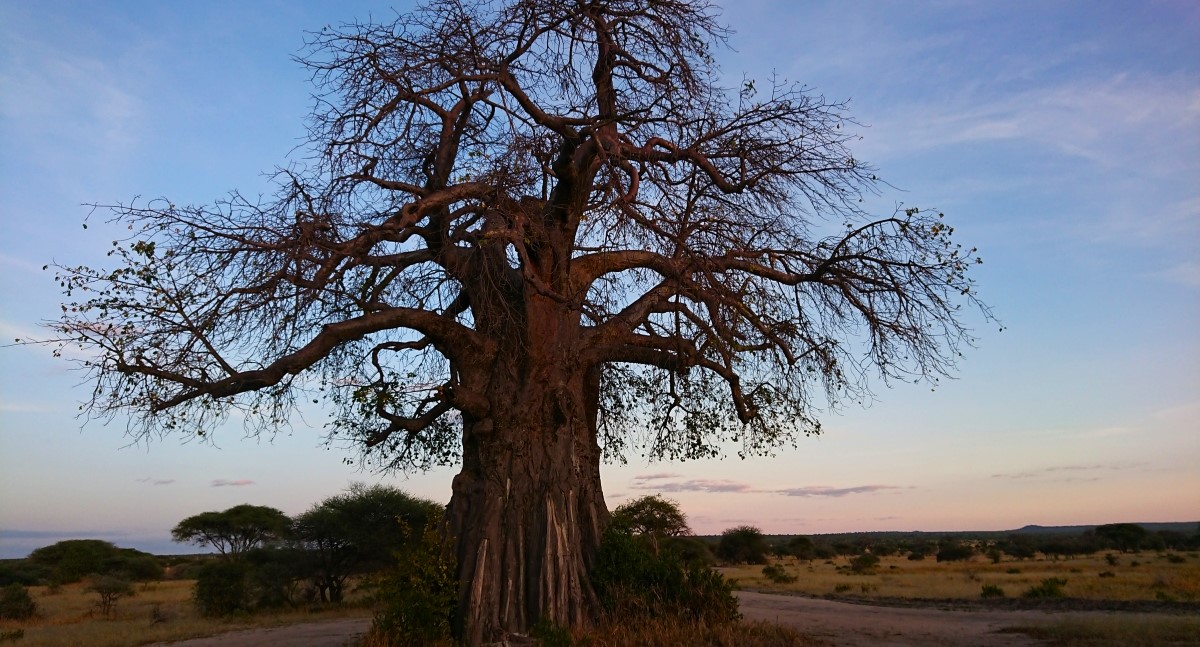
Who would have thought that Baobab, the ancient trees with larger-than-life trunks will one day emerge as one of the leading tourism attractions in Tanzania?
Tarangire, the country’s seventh largest National Park is dotted with baobabs, and it seems foreign visitors are suddenly taking great interest in the giant trees, at least according to tour guides there.
Previously, it was Madagascar, which was known for the Baobab dotted landscape, but now Tarangire Park in Northern Tanzania offers the same, only now with a combination of similarly big elephants, in addition to a variety of other wildlife species.
And when it comes to comparisons, the Baobabs in Tarangire have added value, as they are believed to be much larger, more special with some said to be centuries old.
Majority also have spellbinding cultural histories and other still serve as traditional shrines.
For instance, according to Charles Michael, a safari guide in the park, there is one legendary baobab tree in Tarangire National Park known as Poachers’ hide.
The giant tree with a hollow trunk features a spacious dugout bunker, which according to history, used to be a hideout cave for poachers in the past, but now serves as one of the attractions in Tarangire.
Baobabs are an important part of the Tarangire ecosystem, serving as water and food sources for the variety of wildlife species, but especially elephants.
Visitors believe that if they etch their names on the baobab trunk, it will guarantee them long lives because the giant trees are known for their longevity and resilience.
On his part, the Tanzania National Parks (TANAPA) Conservation Officer in charge of the Tourism Department at Tarangire, Calvin Lyakurwa, explained that the management is also mulling extensive research on why the National Park is experiencing repeated cases of elephants bearing twins.
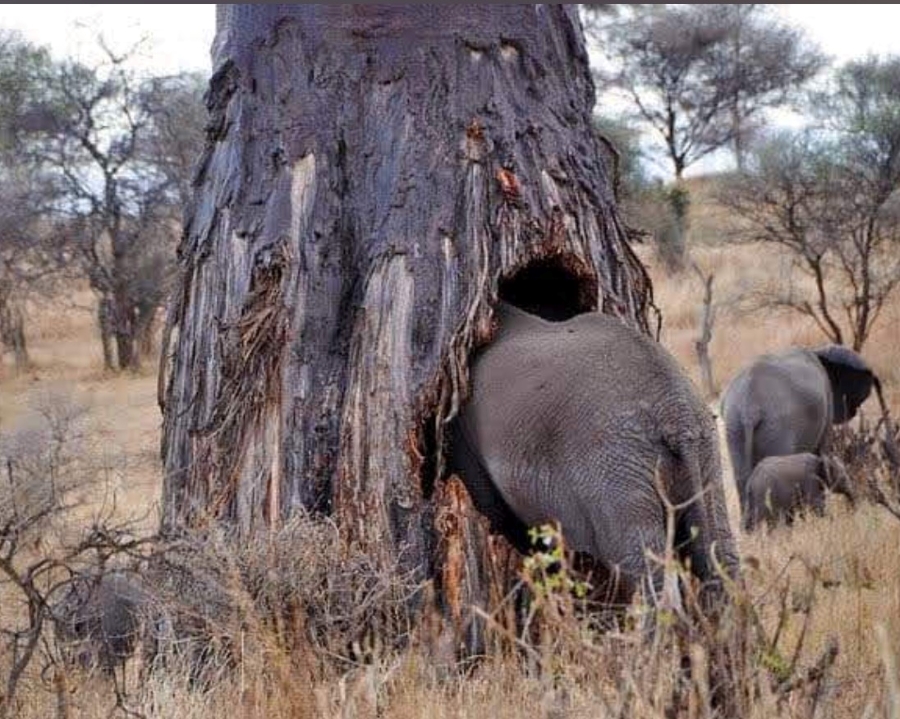
According to Lyakurwa, most tourists visiting the park are mainly interested in the big two flora and fauna factors, the giant baobab trees and the giant mammals, the elephants.
Recording more than 400,000 tourists per year, Tarangire is the second most visited National Park in Tanzania, after the Serengeti plains.
Within the period between October and December 2025 alone, Tarangire had received nearly 75,000 foreign visitors.
Laurent Samila, a tour guide working with Kilimanjaro Unforgettable, says there is a new trend of visitors preferring to travel to Tanzania during end-of-year seasons.
“We are experiencing a surge of tourists this December and this is likely to go on throughout Christmas and the New Year 2026,” said Samila.
But most tourists are usually day trippers. This is due to the park’s easy accessibility from both Arusha City and Babati Municipality, which means tourists come, visit and go back.
To encourage visitors to extend their stay in the park, Tarangire management has introduced night game drives where visitors can sample the conservancy after dusk and enjoy the serenity of the less crowded night tours.
The concept of being the only park with elephants that bear twins is further reinforcing Tarangire as a special conservation precinct with added zoological value.
In 2018 an elephant known as Eloise in Tarangire set a global record for not only giving birth to twins, but also managing to take care of the two young Jumbos without problems for over eight months.
Dr Charles Foley, who was the Director of the Wildlife Conservation Society’s Tarangire Elephant Project was the one who discovered Eloise’s spectacular birth in the park.
According to wildlife experts, Elephants giving birth to twins is a very rare case; it happens in just 1 percent of the entire world population of elephants therefore the odds were against the Jumbos.
For the particular subpopulation which Foley’s group was monitoring in 2018, that was the first recorded twins in more than 20 years.
But four years later in 2022 another elephant in Tarangire again bore twin jumbos and this family was spotted in the Mibuyu Mingi section of the National Park.
Tarangire remains the National Park with highest concentration of jumbos in East Africa and as it happens, the only spot featuring twin jumbos.
While it is not easy to keep baby elephant twins alive, it is even harder for a single mother to handle rivalling siblings, fighting for dominance as far as milk suckling is concerned.
It is being estimated that there are over 300 giant elephants trampling along the 20,000 square kilometers of Tarangire National Park located some 120 kilometers from Arusha, along Dodoma Road.
Other than elephants, Zebras in Tarangire are among the National Park park’s most iconic and frequently sighted animals.
Tarangire National Park, mapped within Monduli, Babati and Simanjiro Districts in Arusha and Manyara regions, is the seventh largest national park in the country after Nyerere, Ruaha, Serengeti, Mikumi, Katavi and Mkomazi.
The park was named from the all-season Tarangire River which crosses through the ecosystem. The river is the only source of water for wild animals during drought spells.
The park is linked by a wide wildlife corridor to Lake Manyara and during dry seasons thousands of animals migrate to the Tarangire National Park from Lake Manyara.