



Govt Of Tanzania Now Pushes Processed Cashew Exports To Broaden Market Base
Tanzania Produces At Least 20 Percent Of Africa’s Cashew Nuts

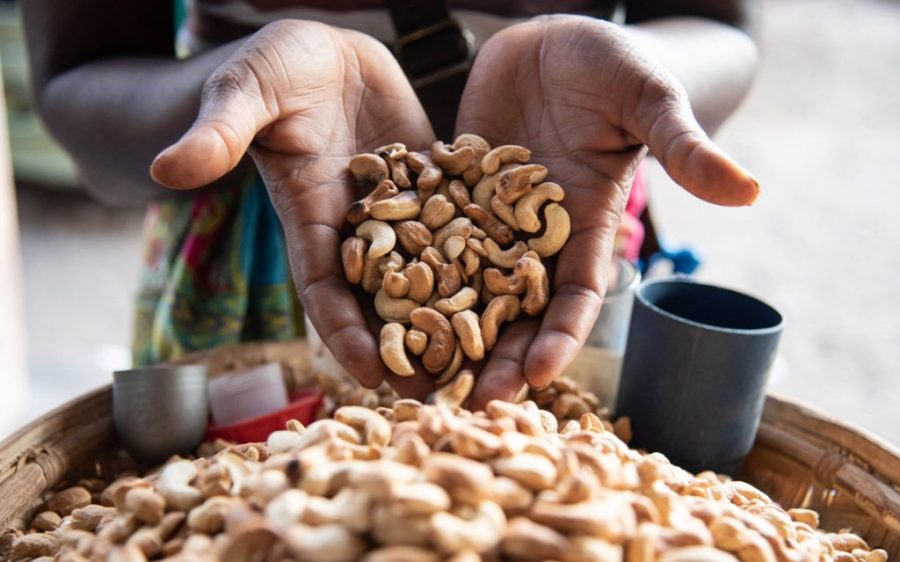
TANZANIA is working on efforts to strengthen the exportation of processed cashew nuts to position itself better to benefit lucratively from the global market for the valuable nuts.
India and Vietnam have for long remained potential buyers of Tanzania’s raw cashew nuts.
Last year, the Board sold a total of 439,000 tonnes through the domestic secondary cashew market (Online Auction System), of which 414,000 tonnes were exported. Out of this, only 41 tonnes went to Vietnam, with the remaining volume exported to India.

In a proactive strategy to broaden market base, the Director General of the Cashew Board of Tanzania (CBT), Mr. Francis Alfred, said the Board had already put in place a useful strategy to serve the market, by selling cashew kernels which will have multiplier effect in the economy and the country will earn substantial amount foreign currency and contribute towards vision 2050.
“The Board is running a series of strategies to push for increased processing of cashews and value addition while sensitising the public on increased local consumption,” he said, adding that so far the strategies are yielding good results.
He attributed this success to the establishment of the Korosho Marathon, an annual event staged to sensitise the public on the wider domestic consumption of the nuts.
“Currently, processed cashews are available in every corner of the country, with impressive consumption. Although prices appear to be a barrier to some consumers, we remain optimistic that they will adjust as demand surges,” he observed.
Mr Francis expressed high optimism that the move by the Board to embark on serious cashew processing projects will take the economic sector to new heights.
“For instance, from September 2025 to date, we have so far managed to export and sell processed cashews valued at US$28 million, which include processed cashew husks and oil,” he said.
“We have established the Maranje Industrial Park, a useful hub for the processing of nuts, expecting to involve a number of modern plants. The Board has already constructed two warehouses, each with a capacity to hold 10,000 tonnes,” he explained.
He added that Ministry of Agriculture through the Cashewnut Board of Tanzania has facilitated the establishment of key infrastructure in the industrial park starting with 354 acres out of 1,572, by constructing roads, and connecting electricity and water to the the area.
“The Maranje Industrial Park has been registered with the Tanzania Investment and Special Economic Zones Authority (TISEZA) to ensure prospective investors benefit from the various tax incentives that the authority offers,” he briefed.
“As I am speaking, we have already received two giant investors, including Mateak, the company which is constructing a factory with a processing capacity of 100,000 tonnes. Construction work on the plant is currently at its mid-stage,” he informed.
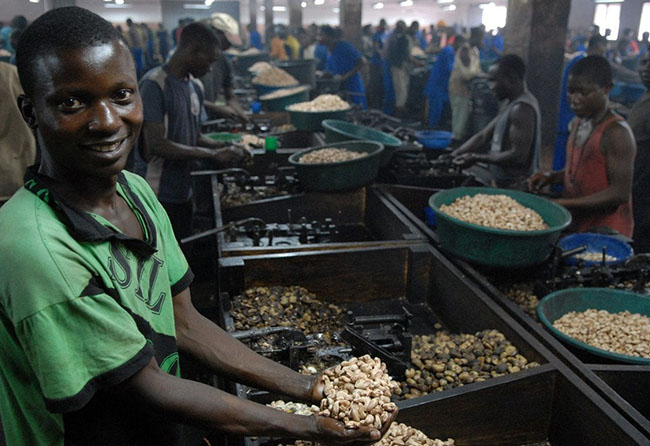
The Director revealed that the Ivory Coast-based giant cashew processing company, Dorado, has also decided to extend its investment foothold into the area by erecting a processing plant with a capacity of 150,000 tonnes, adding that construction of the factory is expected to be finalised next year.
He noted that the installation of these facilities marks a significant stride in the general quest to elevate the performance of cashew processing and value addition in Tanzania.
With the Board’s intention to have 100 percent of the home-grown cashew processed locally, Mr Francis said the ongoing development, which is expected to see the installation of more than 12 processing plants, will translate the vision into reality.
Tanzania stands as one of the largest cashew producers in Africa, with exports contributing between 10 and 15 percent of the country’s foreign exchange earnings. The country is the fifth-largest producer of cashew nuts in the world and ranks second in Africa.
Statistics show that Tanzania produces at least 20 percent of Africa’s cashew nuts, according to figures from the United Nations Food and Agriculture Organisation (FAO).