



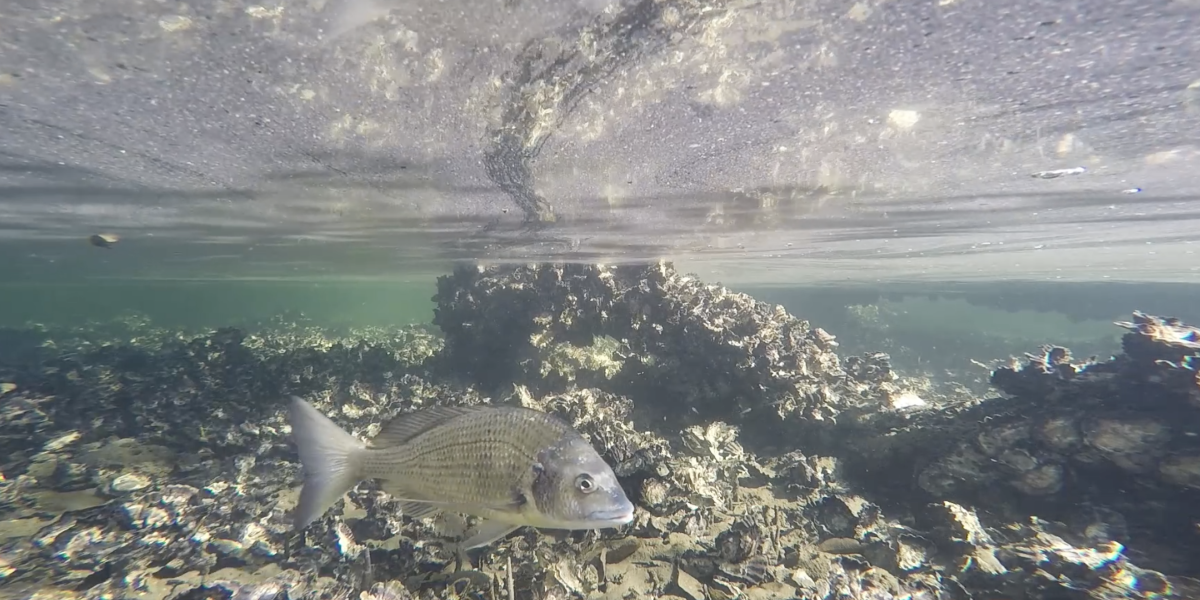
When it comes to restoration, this briny bivalve brings a lot of bang for your buck.
Or should we say your “shuck.”
Because, yes, we’re talking oysters.
Over the last two centuries, Earth has lost more than 85 percent of its oyster reefs to overharvesting, disease, pollution, development and climate change.
And that matters for nearly every aspect of the ocean’s health.
Because whether it’s creating habitat for other species, securing shorelines, locking carbon in its iridescent shells, filtering and cleaning water, supporting aquaculture economies or even topping the hors d’oeuvres menu, the humble oyster packs a mighty conservation punch.
It’s why we’re working on every continent to bring them back.
So, this month we’re exploring the many ways oysters support our planet—and the innovative ways we can support them:
Renewable energy? Meet renewable habitat
The European flat oyster was once the foundation of reef ecosystems that spanned 1.75 million hectares of Europe’s North Sea.
Flat oysters settle together to form underwater cities bursting with fish, crabs and shrimp.
Today those bustling reefs are hard to find; the International Union for the Conservation of Nature classifies them as “collapsed.”
But an unlikely solution is in the air (literally), as the expansion of offshore wind energy in the region brings with it the opportunity to revive reefs. Learn more about this clever solution.
Growing (and regrowing) economies
While restoring wild reefs is key, The Nature Conservancy (TNC) research shows that oyster farming also offers big benefits.
Oysters grown and harvested in Virginia’s Chesapeake Bay are removing costly nitrogen and phosphorous pollution from the largest estuary in the U.S. Oyster farms can also buffer shoreline communities from stronger storms and sustain local economies.
Yet climate change’s warming waters, ocean acidification and rising tides threaten the foundation of this industry. Meet the oyster farmers stepping up as climate advocates and find yourself some sustainably harvested seafood.
Undertaking the detox of the century
Australia’s native oyster can filter one bathtub worth of water every two days, earning the affectionate nickname the “kidneys of the sea.”
But Australia has lost 99 percent of its historic reefs, a loss the country is feeling as it contends with one of its worst harmful algal blooms in recorded history.