



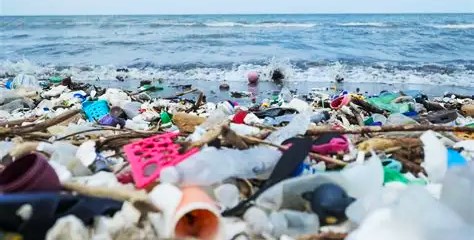
There is an image which paints a sobering, if not grim, picture of planet earth’s growing environmental crisis — ocean plastic pollution.
This is one of the most devastating threats to marine ecosystems and human life alike.
It is being predicted that, if the trend continues, seas and oceans will contain more plastic than fish, come year 2050
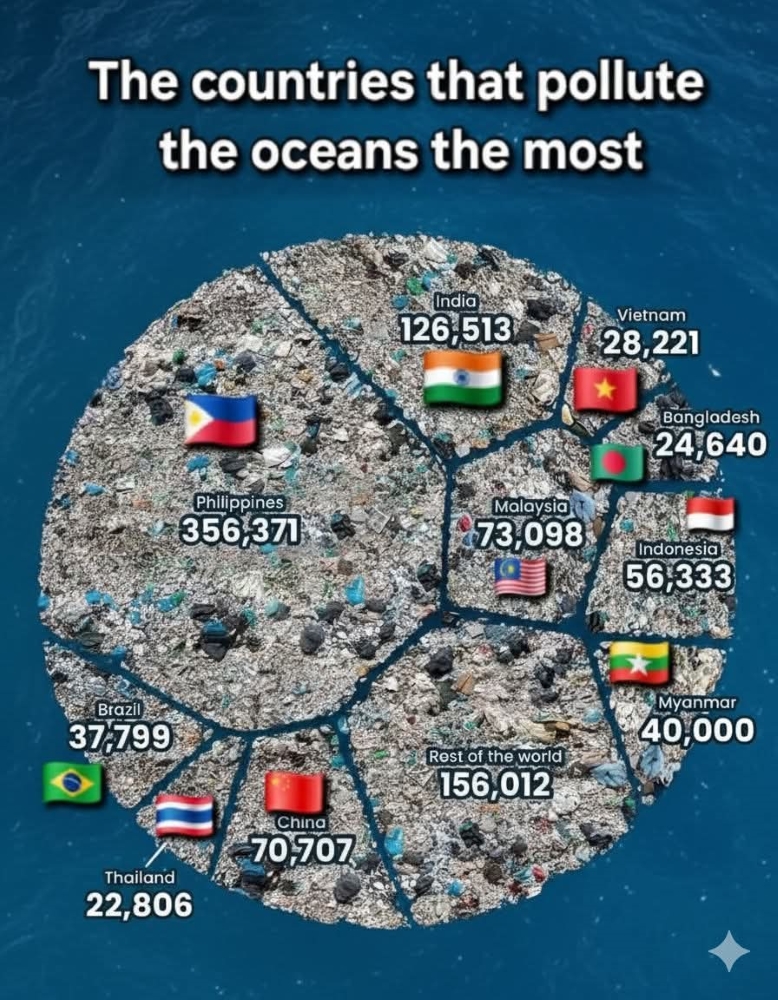
It reveals that a majority of plastic waste entering our oceans comes from just a handful of countries, with the Philippines topping the global list at a staggering 356,371 metric tons per year.
Following closely are India (126,513 tons) and Malaysia (73,098 tons), highlighting the urgent need for stronger waste management systems and environmental reforms.
China churning out 70,707 tons and Indonesia (56,333 tons), two major economic powerhouses in Asia, also contribute significantly due to rapid industrialization, urban population growth, and poor recycling infrastructure.
Other notable contributors include Myanmar which spills out 40,000 tons, Brazil (37,799 tons), Vietnam (28,221 tons), Bangladesh (24,640 tons), and Thailand (22,806 tons).
Meanwhile, the rest of the world collectively contributes 156,012 tons, emphasizing how ocean pollution is truly a global responsibility that transcends borders.
Every year, an estimated 11 million tons of plastic leak into the oceans — suffocating coral reefs, poisoning marine species, and eventually entering our food chain through microplastics.
Scientists warn that if urgent action isn’t taken, by 2050 the ocean could contain more plastic than fish by weight.
This crisis isn’t just an environmental issue; it’s a social, economic, and humanitarian emergency.
Coastal communities face declining fisheries, contaminated water sources, and increasing health risks from polluted ecosystems.
Plastic waste, primarily composed of single-use packaging, bottles, and microbeads, breaks down into smaller particles that are impossible to fully remove from the marine environment — creating a toxic legacy for future generations.
What’s most alarming is that 80 percent of marine litter originates from land-based sources, particularly rivers and poorly managed waste systems.
Countries in Southeast Asia — including the Philippines, Indonesia, and Vietnam — are at the forefront of this issue because of high population densities, heavy reliance on plastics, and limited waste collection infrastructure.
On the other hand, developed nations play an indirect but equally damaging role by exporting waste to developing countries, effectively outsourcing their pollution footprint.
The fight against ocean pollution requires global collaboration, corporate accountability, and public awareness.
Transitioning towards a circular economy, banning single-use plastics, and investing in eco-friendly packaging alternatives are crucial steps to mitigate this damage.
Global movements such as ‘Plastic-Free-July,’ ‘Clean-Seas,’ and ‘Beat-Plastic-Pollution are mobilizing millions to reduce plastic consumption and demand sustainable change. Moreover, innovation in biodegradable materials, waste-to-energy technology, and community-based recycling programs is paving the way for a cleaner, greener future.
This image is more than just an infographic — it’s a wake-up call, a visual reminder that our planet’s oceans are drowning in plastic, and every piece of waste we produce has a lasting impact.
Whether you’re an environmental activist, business leader, or conscious consumer, the message is clear: the time for action is now. Let’s stand together to protect marine life, restore our oceans, and create a future where sustainability isn’t just a choice — it’s a way of life