



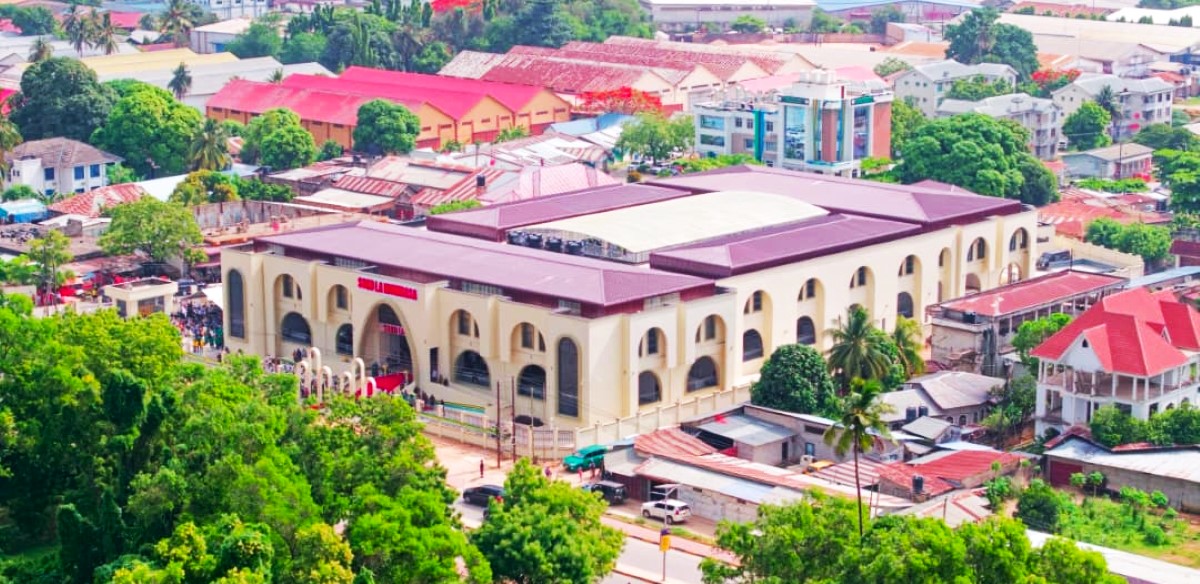
The President of Zanzibar Islands, Dr Hussein Ali Mwinyi has inaugurated the Isles’ largest vegetable market in the Mjini Magharibi ward of Unguja.
The new and modern trading premises were constructed with funds and under the coordination of Zanzibar Social Security Fund (ZSSF) at the cost of 16.6 billion/- Tanzanian shillings.
The Project was executed by the RANS construction company.
This new Mombasa commodity market, specializing on farm produce, especially fruits, grain and vegetables is one of the many modern business outlets that the Isles government intends to establish across Unguja and Pemba archipelagoes.
“The Revolution Government of Zanzibar intends to ensure that all local traders operate and clean, airy and conducive environment being the only way that helps to boost business, attract investors and improve the Islands’ profile,” President Mwinyi explained.
Apparently, the Isles’ government is rolling out special interest free loaning schemes to empower local traders in Unguja and Pemba in boosting their capitals.
According to Dr Mwinyi, another large and modern vegetable market will be constructed at the Kibanda Maiti section of Unguja island, while at the same time his management intends to establish a bazaar along the Haji Tumbo street in the Mjini District.
“We are working to address the long-existed problem of irregular and unplanned vendors cluttering the roads and streets by providing them with official business premises,” added the Zanzibar President, insisting that the islands must always be kept clean, regulated and roads clear.

“When we translocate petty traders from their previous areas to better places, the target is to ensure that these people are well catered for,” Mwinyi maintained.
President Hussein Mwinyi used the occasion to laud the efforts of the Zanzibar Social Security Fund (ZSSF) in effectively executing development projects in the isles.
The ZSSF is currently implementing the Zanzibar Electricity Power Project in addition to the Islands’ sea taxis, electric buses as well as the building of residential housing units, commodity markets and trading bazaars.