



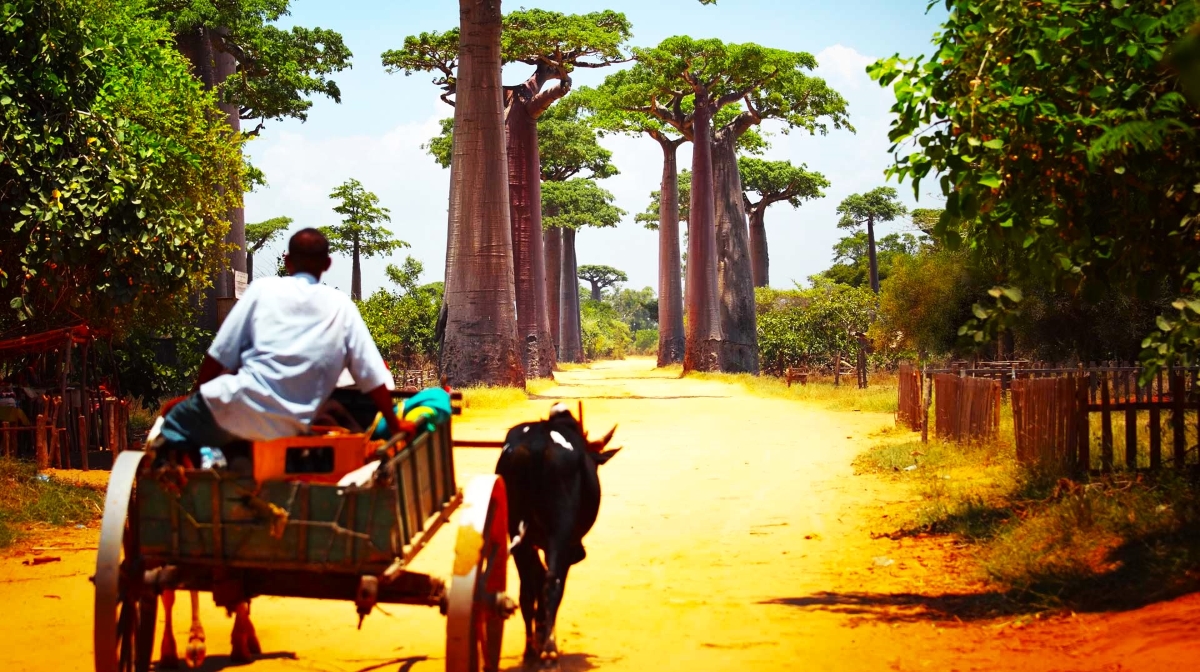
How is it that the Austronesian people settled in Madagascar before the Africans?
Because the mainland Africa happens to be much closer to Madagascar and it’s hard to believe after thousands of years no Africans had settled there.
Mystery?
“There aren’t a lot of islands off the African coast, so while there were lots of fishermen, there was little or nothing encouraging them to go very far out to sea. And 250 miles is, to be fair, a long way,” explains Dane Clarke.
Austronesian languages, family of languages spoken in most of the Indonesian archipelago; all of the Philippines, Madagascar, and the island groups of the Central and South Pacific
Wild, isn’t it? Madagascar was just sitting there, a mere 250 miles off the African coast, while there were humans on the mainland for something like 300,000 years, and it took people from the far side of the Indian ocean to finally settle there.
How on earth could that happen? A question was raised on the Quora platform.
Matt Riggsby who holds a Masters of Arts (MA) degree in Archaeology at Boston University suspects that there are a couple of factors in play there, with the big one being that nobody was going out that far for most of history.
“There aren’t a lot of islands off the African coast, so while there were lots of fishermen, there was little or nothing encouraging them to go very far out to sea,” says Riggsby.
“And 250 miles is, to be fair, a long way. That is, for example, twice as far as Greece to Turkey across the Aegean.”
“That’s days of sailing in a straight-line east from northern Mozambique, and if you’re a coastal fisherman whose society hasn’t had any reason to develop Polynesian-style navigation techniques, why would you do that?” he asks.
Another notable factor, according to the researcher, is that nobody would be sailing to Madagascar by sailing due east along the shortest distance.
What East Africa lacks in archipelagoes to encourage longer-range navigation, it makes up for in strong north-south currents allowing ships to make long coastal voyages easily.
This became critical in establishing Medieval shipping routes around the Indian Ocean, but traveling east into it from the East African coast is not easy.
Scott Carter, a Historian says there is evidence for some human habitation rather earlier than the best guess first Austronesian arrivals, who probably arrived in the 5th – 6th Century (possibly a century or so later).
“Recent archaeological excavations in northern Madagascar provide evidence of occupational sites with microlithic stone technologies related to foraging for forest and coastal resources. A forager occupation of one site dates to earlier than 2000 B.C., doubling the length of Madagascar’s known occupational history, and thus the time during which people exploited Madagascar’s environments. “
Also, there was no development of indigenous oceangoing, watercraft in the relevant areas of Africa until well after the Austronesian arrivals.
Hence any settlement is going to be caused by a very small group who got lost and blown far out to sea; easy for said group to die out.
Oceangoing meaning more than just “operable in salt water”; ignoring navigation skills, oceangoing would imply being capable of operating for at least a couple of days out of sight of land.
The furthest south area along the east African coast that seems to have had regular contact with the broader Arabian Sea trade routes during the broadly classical period is somewhere near modern Dar es Salaam, more than 1100 kilometers from the closest point of Madagascar.
Yes, the shortest sea distance from mainland Africa (near Nacala, Mozambique) to Madagascar is only 400 kilometers, but there is beneath zero reason for a mariner to leave sight of land along that part of the route (more likely would be from northern Mozambique to the Comoros [settled a few centuries after Madagascar was], then island hopping, but Mayotte is not that much closer to the nearest point in Madagascar).