



World’s leading airports for layovers, from the best restaurants and cafés to technology friendly connectivity
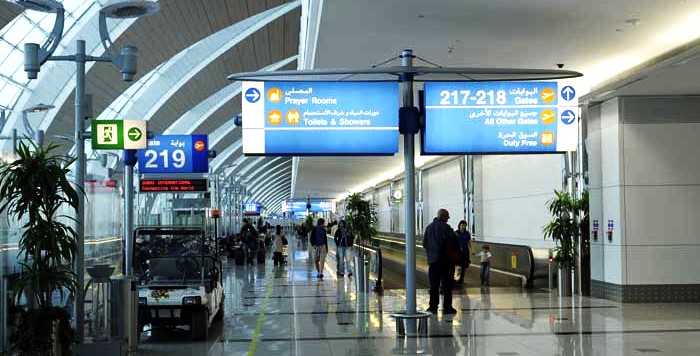
New study reveals the world’s top airports for layovers, from restaurants and cafés to tech-friendly connectivity
Singapore Changi dominates the global layover experience, ranking first overall and finishing top three in five of the six categories analyzed.
Middle Eastern hubs excel at comfort, with Dubai and Doha airports offering unmatched shopping, showers, and rest facilities for long connections.
Food matters more than ever during layovers, with airports like New Delhi and Heathrow ranking among the top globally for restaurants and cafés.
Connectivity is now a defining feature of a good layover, as the highest-ranked airports consistently score near the top for tech and Wi-Fi amenities.
Entertainment and rest zones increasingly separate great airports from good ones, especially for travelers facing layovers of three hours or more.
Asia dominates the top 10, reflecting long-term investment in passenger experience rather than just flight volume.
Layovers have become an unavoidable part of modern travel.
As airlines streamline routes and international trips increasingly rely on connections, millions of travelers now spend hours inside airports every single day.
For some, it’s a quick coffee and a charging socket.
For others, it’s a six-hour wait that needs food, rest, and something to do in between.
That shift has pushed airports to rethink what a layover should feel like.
Instead of endless queues and uncomfortable seating, the world’s best airports now offer everything from proper restaurants and quiet sleep zones to showers, entertainment, and fast, reliable connectivity.
When done right, a layover becomes less of an inconvenience and more of a break in the journey.
A new study by TripSIM analyzed 50 of the world’s busiest international airports to find out which ones truly deliver the best layover experience, based on six equally weighted factors: Restaurants and cafés, shops, Entertainment amenities, Showers and on-site hotels, Connectivity and tech amenities, and rest zones.
1. Singapore Changi Airport, Singapore
Singapore Changi Airport comfortably claims the top spot, delivering one of the most well-rounded layover experiences in the world.
It ranks first overall for entertainment amenities (41), connectivity and tech amenities (100), and rest zones (30), making it ideal for both productivity and relaxation.
The airport also ranks second for restaurants and cafés (181) and second for shops (123), showing strength across every category.
With features like indoor gardens, movie theaters, quiet lounges, and lightning-fast Wi-Fi, Changi’s high ranking reflects years of sustained investment in passenger comfort rather than just scale.
2. Dubai International Airport, United Arab Emirates
Dubai International Airport ranks second overall and stands out most for retail and comfort.
It finishes first for shops (173) and first for showers and on-site hotels (14), making it especially appealing for long international connections.
The airport also ranks second for entertainment amenities (34) and second for rest zones (26), while placing fourth for connectivity and tech amenities (97).
Dubai’s strength lies in its ability to keep travelers comfortable and entertained regardless of layover length, backed by a design that caters heavily to transit passengers.
3. New Delhi Indira Gandhi Airport, India
New Delhi’s Indira Gandhi Airport ranks third overall and leads the entire study for food, placing first for restaurants and cafés (208).
It also ranks fifth for shops (118) and sixth for entertainment amenities (22).
While its showers and on-site hotels (8, ranked 9th) and rest zones (15, ranked 8th) are more modest compared to top hubs, its dominance in dining helps push it high up the list.
The airport’s ranking reflects how food quality and variety can significantly elevate the layover experience, even if other amenities are more limited.
4. Hong Kong International Airport, Hong Kong SAR
Hong Kong International Airport delivers consistency across the board, with no major weaknesses. It ranks fifth for restaurants and cafés (154), fourth for entertainment amenities (26), and sixth for connectivity and tech amenities (95). Its showers and on-site hotels (9, ranked 7th) and rest zones (18, ranked 5th) reinforce its appeal for longer connections.
The airport’s balanced performance reflects its role as a global transit hub designed to move passengers smoothly while keeping them comfortable in between flights.
5. Doha International Airport, Qatar
Doha International Airport ranks fifth overall, excelling particularly in retail and connectivity. It places fourth for shops (123) and fifth for connectivity and tech amenities (96), while also ranking fifth for showers and on-site hotels (11).
Although it sits lower for restaurants and cafés (64, ranked 18th), the airport compensates with modern infrastructure and premium facilities aimed at transit passengers.
Its ranking highlights how strong tech and comfort features can offset fewer dining options.
6. Incheon International Airport, Seoul, South Korea
Incheon International Airport stands out for its emphasis on entertainment and connectivity rather than sheer volume. It ranks third for entertainment amenities (28), third for connectivity and tech amenities (98), and third for rest zones (22).
While its restaurants and cafés (36, ranked 27th) and shops (37, ranked 21st) are fewer than some competitors, Incheon’s focus on relaxation zones, cultural exhibits, and digital convenience makes it especially appealing for the long layovers where people’s resting matters most.
7. London Heathrow Airport, United Kingdom
London Heathrow ranks seventh overall, driven largely by its strong food scene. It places third for restaurants and cafés (178), reflecting its wide range of dining options across terminals.
However, it ranks lower for shops (22, ranked 31st) and rest zones (10, ranked 17th), which pulls down its overall score.
Heathrow’s position highlights how even globally important airports can struggle with space and comfort, particularly during peak travel hours.
8. Tokyo International Haneda Airport, Japan
Tokyo Haneda Airport offers a solid all-round experience, ranking fifth for entertainment amenities (23) and ninth for connectivity and tech amenities (92).
It also performs well for dining, with 117 restaurants and cafés (ranked 10th).
While its showers and on-site hotels (7, ranked 13th) and rest zones (14, ranked 10th) are more limited, Haneda’s efficiency and cleanliness contribute to a smoother layover overall.
9. Hamad International Airport, Doha, Qatar
Hamad International Airport ranks ninth despite ranking near the bottom for dining (13 restaurants, ranked 46th) and shops (13, ranked 42nd).
Its high placement is driven almost entirely by comfort and technology, ranking second for connectivity and tech amenities (99), third for showers and on-site hotels (12), and fourth for rest zones (20). This shows that for some travelers, quiet spaces, sleep facilities, and strong Wi-Fi can outweigh retail and dining volume.
10. Tokyo Haneda International Airport, Japan
Tokyo Haneda appears again in tenth place, reflecting variation across terminals and amenities. It ranks sixth for shops (112) and seventh for entertainment amenities (22), while placing tenth for connectivity and tech amenities (91).
Its restaurants and cafés (45, ranked 22nd) and rest zones (13, ranked 11th) are more mid-range, but the airport still delivers a dependable and traveler-friendly layover experience.
Behind the facts
Arber Abdullahu, a travel expert at TripSIM, says the rise of high-quality layover airports reflects a broader shift in how people travel.
“Layovers used to be something travelers just tolerated,” Abdullahu explains.
“Now, people actively notice whether an airport makes those hours easier or harder. Good food, fast internet, and somewhere to sit or rest quietly can completely change how a trip feels.”
He adds that connectivity has become especially important in recent years.
“For many travelers, a layover is a chance to catch up on work, message family, or rebook plans. Airports that invest in strong Wi-Fi and charging infrastructure immediately stand out.”
According to Abdullahu, airports like Singapore Changi and Dubai International set the standard because they understand transit passengers aren’t just passing through.
“They’re building spaces where people can actually reset between flights. That’s why these airports consistently rank at the top, year after year.”